Also searched as: anti climb wire fence, anti climb welded wire fence, anti climb temporary fencing, anti climb temporary fence panel, anti climb security fence, anti climb mesh, anti cut security fencing, anti cut anti climb fence, anti climb metal fencing, and 358 wire mesh fence variants.
Tool layer + report layer in one canonical URL
Anti-climb welded wire fence for industrial sites fit checker and 358 buying guide.
If you are evaluating an anti climb wire fence or anti climb welded wire fence for industrial sites, start with the checker first. It helps you decide whether a 358 anti climb fence is justified for your risk profile, budget, and installation constraints before RFQ. This canonical page also maps common aliases such as anti climb temporary fencing, anti climb temporary fence panel, anti climb security fence, anti cut security fencing, anti cut anti climb fence, anti climb mesh, and anti climb metal fencing.
Looking for a close variant? Start with anti climb temporary fencing, anti climb temporary fence, anti climb temporary fence panel, anti climb panels, anti climb panel, anti climb security fence, anti cut anti climb fence, anti cut security fencing, anti climb security fencing, anti climb wire fence, anti climb welded wire fence, and anti-climb welded wire fence for industrial sites. This canonical URL keeps all of them in one decision path so teams do not compare duplicate pages. For mesh-oriented language, use anti climb mesh, anti climb metal fencing, and anti climb mesh panels as the same intent family, then cross-check anti climb fence mesh scope in the fit checker and FAQ.
Best for projects where anti-climb geometry, sightlines, and tamper delay matter more than the lightest install package.
Good boundary guardrail: if the project is low-risk, short, and cost-led, compare standard temporary fence before defaulting to 358.
Published:
Updated:
Alias coverage for “anti cut security fencing” and “anti cut anti climb fence” refreshed on May 8, 2026. Evidence layer checkpoints were rechecked through May 8, 2026 (including Federal Register posting 2026-08678 on May 5, 2026, USITC Publication 5727 public posting status, case-code API post-final checks for A-570-198/C-570-199, and ISO 22343 lifecycle changes: WD Part 3 deleted plus DAmd 1 still under development). Items without current public execution data remain explicitly marked pending. Review cadence: every 6 months or sooner when standards or legal status changes.
1.27 to 7.0 m
Permanent-system height band observed across current supplier pages.
High-visibility security perimeters
Especially where camera sightlines and anti-climb delay both matter.
What makes the page different
The tool answers the immediate question first: should this site specify anti climb fence at all? The report layer then shows the public geometry, height, temporary use cases, and buying risks behind that recommendation.
Fast summary for alias intent
In buyer language, terms like “anti climb temporary fencing”, “anti climb temporary fence panel”, “anti climb security fence”, “anti cut security fencing”, “anti cut anti climb fence”, “anti climb mesh”, “anti climb welded mesh”, “anti climb wire fence”, “anti climb welded wire fence”, and “anti-climb welded wire fence for industrial sites” usually point to the same small-aperture 358-style intent. This page keeps one canonical URL so your procurement team can make decisions from a single evidence-backed source.
Key conclusions
The main decisions behind a 358 welded mesh purchase are visible before you ask for a quote.
These are the conclusions that matter most in early-stage screening. Each one is backed by the public source layer below, or explicitly marked as synthesis.
Stage1b gap audit
What this enhancement round fixed, and what is still open.
This table isolates evidence weakness from execution risk before adding new claims. Closed items are now source-backed below. Open items stay explicitly marked as pending.
| Gap detected | Risk if ignored | Stage1b fix | Status |
|---|---|---|---|
| US AD/CVD rate markers were mis-mapped against primary filings. | Landed-cost normalization can be materially wrong, pushing buyers into the wrong supplier or contract structure. | Rechecked Federal Register 2026-05004/2026-05005 plus the U.S. DOC fact sheet; corrected AD/CVD rate markers, corrected import-value baseline, and added execution-timing boundaries for suspension/cash-deposit windows. | Closed with primary authority evidence (Federal Register + U.S. DOC, rechecked April 28, 2026). |
| Forced-entry claims lacked attacker-team context. | Procurement may select an inadequate rating for coordinated intruder scenarios. | Added explicit LPS band boundary (A1-E20 one adversary; F1-H20 two adversaries) in conclusions, spec table, and standards matrix. | Closed with public evidence (NPSA forced-entry guide + LPS 1175). |
| Vehicle-threat crossover was noted, but execution rules were thin. | Teams may buy fence upgrades while leaving vehicle pathways under-specified. | Added ISO 22343 transition marker and NPSA temporary VSB constraints (as-tested formation, delay + impact ratings, maximum gap reference). | Closed with public evidence (ISO + NPSA). |
| ISO 22343 draft lifecycle boundary for access-control clauses was not explicit. | Tenders can cite deleted or draft-only ISO text as mandatory compliance evidence, creating non-comparable submissions and avoidable assurance disputes. | Added lifecycle boundary language: ISO/WD 22343-3 deleted (stage 20.98, March 25, 2026) and ISO 22343-1:2023/DAmd 1 under development (stage 40.60 close-of-voting dated April 28, 2026), then updated FAQ, standards, procurement, and source layers. | Closed with primary standards-body lifecycle evidence (ISO standard pages + ISO/TC 292 catalogue, accessed May 8, 2026). |
| Vehicle-control guidance was too UK-centric for US buyer workflows. | US event and facility teams can over-rely on anti-climb fence geometry without site-specific standoff and barrier strategy. | Added CISA March 2025 vehicle-ramming guidance boundary (standoff zones + passive/active barrier selection + anchoring/impact-load checks) into conclusions, regulatory matrix, and source layer. | Closed with primary US authority guidance (CISA Vehicle Ramming Action Guide, accessed April 21, 2026). |
| US utility/CNI pathway lacked explicit CIP-014 applicability and cadence boundaries. | Teams may treat a mesh label as CIP compliance and miss asset-screening and reassessment obligations. | Added CIP-014 applicability criteria and cadence boundaries (CIP-014-3 30/60-month reassessment pathway + jurisdiction-dependent CIP-014-4 24-month implementation logic) into conclusions, FAQ, standards/regulatory matrices, procurement gates, and sources. | Closed with primary standard evidence (NERC CIP-014-3 + CIP-014-4 implementation plan, accessed April 26, 2026). |
| Chemical-site regulatory boundary omitted current CFATS statutory status. | Procurement language can treat expired CFATS authority as active federal mandate and create false compliance claims. | Added CFATS statutory-expiry boundary (July 28, 2023) and current non-enforcement implications into FAQ, regulatory matrix, procurement gates, sourcing checklist, and source layer. | Closed with primary authority evidence (CISA CFATS statutes page, accessed April 26, 2026). |
| Temporary VSB evidence lacked explicit delay thresholds and dual-rating rule. | Teams may treat one certificate as sufficient and still miss either high-speed stop or repetitive-ramming delay performance. | Added NPSA temporary guidance boundary: pair impact + delay ratings and use VADS 30-second minimum / 60-second higher-tier markers in conclusions, standards, FAQ, and source layers. | Closed with public evidence (NPSA temporary VSB guidance, accessed April 12, 2026). |
| Vehicle approach-speed assumptions were not anchored to VDA due diligence. | Both under-specification and over-specification risk remain hidden until late design or operations review. | Added NPSA VDA due-diligence boundary (vital step, under/over-estimation consequences, and revalidation triggers after site/perimeter/off-site changes). | Closed with public evidence (NPSA VDA guidance, last updated March 17, 2026). |
| “All 358 quotes are equivalent” lacked concrete counterexamples. | Single-layer and reinforced systems may be priced or compared as if they were interchangeable. | Added variant reality table using archived NPSA CSE entries (single-layer 4 mm, double-skin DS2, and Super6 variant). | Closed with public evidence (NPSA CSE archive pages). |
| Open installed-cost benchmark remained weak. | Buyers may anchor on panel-only prices and miss gate/foundation/HVM scope costs. | Kept explicit uncertainty flag, retained RFQ-based comparison path, and added a US upstream volatility marker (BLS PPI SI STEEL3 +15.6% year over year in March 2026) so pricing clauses can be tied to auditable indices. | Partially closed with primary data (BLS PPI detailed report, March 2026). |
| US trade-remedy boundary for China-origin temporary steel fencing was under-specified. | Teams can normalize quotes on panel price while missing supplier-specific AD/CVD exposure and scope-triggered landed-cost shifts. | Added Commerce final AD/CVD determination dates and rates (March 16, 2026), USITC final injury determination date (April 9, 2026), plus scope and procurement-gate language for case mapping before PO release. | Closed with primary authority evidence (Commerce final fact sheet + USITC final determination + Federal Register final determinations). |
| Post-final order-operation timing is still time-sensitive in live procurement. | Quotes can rely on stale assumptions when case-status execution details update between bid freeze and purchase order. | Refreshed this checkpoint with a May 8, 2026 pass: Federal Register posted ITC determinations notice 2026-08678 on May 5, 2026, USITC Publication 5727 is now publicly posted (HTTP last-modified May 4, 2026), and case-code API checks for A-570-198 and C-570-199 published on/after March 17, 2026 still returned zero post-final records. Kept pre-PO recheck actions for live order-stage updates. | Partially closed with primary record snapshot; still pending reconfirmation at order-release stage (rechecked May 8, 2026: ITC notice + Publication 5727 posted, but no post-final case-code records yet). |
| Pre-commencement Martyn’s Law compliance-selling risk was under-specified. | Teams can over-spend on generic products/services that do not map to final legal guidance or site-specific duty tier. | Added SIA proportionate-approach boundary language: Act not in force yet, guaranteed-compliance sales claims are high-risk before final guidance/site mapping, and section-27 guidance should be used as the current readiness baseline. | Closed with primary government evidence (SIA proportionate-approach notice + GOV.UK implementation-guidance publication, accessed April 26, 2026). |
| Martyn’s Law section-12 guidance timing was not explicit enough for procurement wording control. | Teams can freeze draft guidance language as if it were final legal text and create avoidable re-issue/review cycles. | Added section-12 consultation timeline markers (launched April 15, 2026; closes June 12, 2026; expected commencement Spring 2027) plus section-27 publication timing markers into conclusions, FAQ, regulatory matrix, and source layer. | Partially closed with primary government evidence (SIA consultation notice + GOV.UK guidance publication, accessed April 26, 2026); final section-12 guidance remains pending. |
| Certificate references lacked explicit lab-accreditation traceability. | Projects may accept reports that are real documents but outside accredited scope, reducing comparability and assurance confidence. | Added ISO/IEC 17025 + ILAC MRA boundary checks in conclusions, standards/procurement matrices, and sourcing checklist so report provenance is validated before award. | Closed with primary standards/recognition evidence (ISO + ILAC MRA pages, accessed April 22, 2026). |
| EU CPR recast transition logic was not explicit for fence/gate procurement. | Suppliers can submit non-equivalent declaration packs across mixed-year delivery lots and create acceptance delays. | Added date-explicit Regulation (EU) 2024/3110 transition boundary (application from January 8, 2026, Article 92 from January 8, 2027, with Article 95 transitions) into standards, regulatory, procurement, FAQ, and source layers. | Closed with primary legal text evidence (EUR-Lex Regulation (EU) 2024/3110). |
| Legal/permitting boundary for fence height was not explicit. | Teams can place orders before permits and trigger redesign, delay, or non-compliant installation. | Added GPDO Class A boundary markers (England: 1 m by vehicular highway, 2 m elsewhere with stated exceptions) into spec, standards, FAQ, and source layers. | Closed with primary legislation evidence (UK SI 2015/596, Schedule 2 Part 2 Class A). |
| Planning logic was too England-centric for UK-wide buyers. | Teams may apply the wrong legal threshold in Wales, Scotland, or Northern Ireland and fail planning checks late. | Added Wales, Scotland, and Northern Ireland fence-height decision boundaries (including road-distance trigger differences) to standards, regulatory, FAQ, risk, and source layers. | Closed with primary/government evidence (gov.wales, gov.scot Circular 1/2024, NI GPDO 2015 Part 3 Class A). |
| Martyn’s Law tier and commencement boundaries were not mapped to fence procurement decisions. | Teams can over-buy physical perimeter measures for standard-duty sites or claim legal compliance before the Act is in force. | Added tier boundary (200 to 799 vs 800+), pre-commencement timing boundary (at least 24-month implementation period after April 3, 2025), and explicit procedure-versus-physical-measure procurement gates in conclusions, standards, regulatory matrix, procurement hard-stops, and FAQ. | Closed with primary government evidence (Home Office statutory guidance accessed April 24, 2026; SIA regulatory-role update published April 15, 2026). |
| Event-area scope under Martyn’s Law was too easy to overgeneralize. | City events can treat open public roads/pavements as if they were automatically in-scope controlled perimeter areas, leading to mis-scoped spend and false assurance. | Added secure-perimeter and entry-control boundary language, including explicit out-of-scope treatment for open public areas unless they are in the immediate vicinity and under event control. | Closed with primary government evidence (Home Office statutory guidance for the Terrorism (Protection of Premises) Act 2025, accessed April 24, 2026). |
| Corrosion-spec language did not route buyers beyond ISO 1461 exclusions. | Quotes can look compliant while mesh wire/panel coating and test scope remain ambiguous. | Added component-level standards path: EN 10244-2:2023 for zinc/zinc-alloy wire coatings and EN 10223-7:2012 for welded mesh panel requirements. | Closed with standards-catalog evidence (BSI Knowledge entries, accessed April 7, 2026). |
| Coating durability language overstated what lab tests can prove. | Teams can convert a laboratory pass into an exact in-service life claim and under-price maintenance risk. | Added ISO 12944-6 boundary language: lab results are selection aids (not exact durability), and should be tied to declared environment class plus maintenance assumptions. | Closed with primary standards-body evidence (ISO 12944-6:2018 abstract and lifecycle marker, rechecked April 21, 2026). |
| Cross-market standards pathway (LPS vs ASTM) was under-defined. | Guide-only and test-rated claims may be compared as if they were equivalent. | Added ASTM F3204 (design guide) and ASTM F2781 (forced-entry/ballistic/low-impact test practice) boundary language in standards, procurement gates, FAQ, and sources. | Closed with standards-body evidence (ASTM F14.50 jurisdiction and F3204 page). |
| Gate security and emergency-egress coupling was under-specified. | Security hardware choices can conflict with evacuation/access requirements and fail review. | Added NPSA and HSE boundary language into standards matrix, risk table, and FAQ to force gate-by-gate egress validation. | Closed with public guidance evidence (NPSA Fences and Gates + HSE CON1-2018). |
| Powered-gate compliance boundary was implicit, not explicit. | Fence-level security claims may pass early review while gate-level safety/compliance checks fail late in delivery. | Expanded gate boundary to a cross-market pathway: ASTM F2200-24 + F900-25 + F1184-23e1 active-series markers for US scopes, plus UK HSE handover-document requirements and EN 13241 / EN 12453 / EN 12604 version controls. | Closed with standards and regulator evidence (ASTM F14.15 + HSE powered-gate guidance + BSI standards pages + UL Code Authority). |
| Gate terminology boundary (consumer safety gate versus perimeter security gate) was not explicit. | Teams can cite a valid “gate and enclosure” reference that does not prove perimeter security suitability. | Added 16 CFR part 1239 / ASTM F1004 scope boundary from Federal Register rule 2026-06306 (published April 1, 2026; effective July 19, 2026), clarifying children's gate safety scope versus perimeter security gate evidence requirements. | Closed with primary federal rulemaking evidence (Federal Register 2026-06306, accessed April 23, 2026). |
| UK escape-route gate hardware traceability (EN 179 vs EN 1125) was under-specified. | Procurement can pass generic powered-gate checks but still fail late on exit-device suitability and documentation. | Added UK Notice of Publication 0123/25 and BSI EN 179/EN 1125 lifecycle markers across FAQ, standards boundary, procurement gates, and source layer to make exit-device evidence explicit. | Closed with government notice + standards-catalog evidence (Notice 0123/25; BSI entries accessed April 23, 2026). |
| UK powered-gate handover evidence requirements were not explicit enough. | Projects can proceed with panel/gate hardware selected but still fail legal acceptance because mandatory gate documentation is missing. | Added a UK handover gate: Declaration of Conformity, user instructions in English, conformity marking/label checks, and Construction Products Regulation Declaration of Performance where applicable. | Closed with regulator evidence (HSE powered gates basics, last updated October 29, 2024). |
| US emergency-egress lock boundary for secured gates was under-defined. | Perimeter gates can pass security review but still violate occupied-hours egress rules, creating compliance and life-safety exposure. | Added OSHA egress boundary language from 29 CFR 1910.36 and 29 CFR 1926.34 into FAQ, standards, procurement, risk, and sourcing layers. | Closed with regulator evidence (OSHA standards text, accessed April 13, 2026). |
| US accessibility boundary for secured pedestrian gates was not explicit. | Security-led gate layouts can pass egress review but still fail route accessibility checks, causing redesign and acceptance delay. | Added ADA 2010 route/gate geometry boundaries (403.5.1, 404.2.3, 404.2.6) across FAQ, standards/regulatory matrices, risk table, procurement gates, and source layer. | Closed with primary federal accessibility-standard evidence (ADA 2010 Standards, accessed April 22, 2026). |
| EU machinery transition timing for powered gates was not explicit. | Cross-border tenders can mix old/new legal references and create avoidable conformity-document disputes. | Added a date-explicit EU transition boundary: Directive 2006/42/EC for machinery placed on market before January 20, 2027, with Regulation (EU) 2023/1230 mandatory from that date. | Closed with primary authority evidence (European Commission machinery page, accessed April 13, 2026). |
| Federal status of Alex Gate Safety Act was easy to misread. | Teams may write “federal requirement” language into tenders before the bill is enacted. | Rechecked Congress.gov and corrected the date anchor: latest listed action on the public tracker is May 8, 2025 (introduced in Senate and referred to committee), and status remains pre-enactment. | Partially closed with primary tracker evidence (Congress.gov public bill page, accessed April 22, 2026). |
| Australian anti-climb mesh rule existed, but version-control boundary was not explicit. | Teams can mix superseded and current standards language, making bids non-comparable and acceptance checks inconsistent. | Added SafeWork NSW anti-climb field rule (no reo mesh, no mesh >75 mm), explicit AS 4687 version boundary (2007 superseded, 2022 multi-part set current), and NSW statutory pathway evidence showing AS 4687.1/.2/.3:2022 references in community-event temporary-fence clauses. | Partially closed with regulator + standards-catalog + NSW legislation evidence (final contract basis still authority/project-specific). |
| US wind-basis version boundary for temporary 358 decisions was under-defined. | Design assumptions can default to legacy note references and fail adopted code-cycle review at engineering or permit stage. | Added code-cycle signal that 2024 IBC structural references use ASCE 7-22 and clarified ASTM F3342 ASCE 7-10 language as a boundary note rather than automatic governing design basis. | Closed with standards-body + code-body evidence (ASCE + ICC). |
| US code-adoption variability was not anchored to a primary public dataset. | Multi-state projects can reuse one code-edition assumption and fail AHJ checks late in design or permit review. | Added FEMA FY2025 BCAT evidence and examples to show that hazard-resistant adoption is jurisdiction-specific, then updated FAQs, standards boundaries, sourcing prompts, and source-layer references. | Partially closed with primary authority evidence (FEMA BCAT FY2025 regional fact sheets, accessed April 21, 2026). |
| Fence-only delay expectations lacked a quantified baseline. | Buyers may overestimate what fence geometry alone can deliver during an active intrusion. | Added UFC baseline markers (chain-link delay and clear-zone guidance) and framed them as context-specific, non-universal inputs. | Closed with public government reference (DoD UFC 4-022-03, October 1, 2013). |
| Legacy MFES wording remained a hidden carry-over risk in new tenders. | Procurement packs can treat withdrawn MFES labels as if they were current qualification evidence. | Added explicit MFES boundary: NPSA states fences/gates are no longer tested to MFES and MFES-rated CSE entries were removed from January 1, 2026. | Closed with primary authority evidence (NPSA Security Fences and Gates, last updated August 14, 2025; rechecked April 21, 2026). |
| Anti-climb topping legal boundary next to highways was implicit. | Barbed-wire decisions can pass technical review but fail later through nuisance/injury enforcement action. | Added Highways Act 1980 section 164 boundary (England and Wales), including notice-to-abate window and nuisance trigger language into standards, risk, procurement, FAQ, and source layers. | Closed with primary legislation evidence (Highways Act 1980 s.164, revised text checked April 12, 2026). |
| Road-adjacent topping legal scope was over-compressed for devolved UK delivery. | Teams may clear section-164 checks but still miss Scotland/NI controls or broader hazard types such as electrified and spiked details. | Added Scotland Roads (Scotland) Act 1984 section 93 and NI Roads Order 1993 article 54 boundaries, including statutory scope differences versus England/Wales section 164. | Closed with primary legislation evidence (rechecked April 12, 2026). |
| Temporary screen/wrap boundary was not explicit. | Teams can add privacy mesh, debris netting, or branding panels without re-checking wind behavior, creating avoidable stability and compliance risk. | Added ASTM F3342 temporary-fence boundary language: screening can convert the line to a more solid barrier and may require permanent-fence design treatment. | Closed with standards-body evidence (ASTM F3342-19, accessed April 18, 2026). |
| Temporary wind controls were under-specified at site-operations level. | Teams can pass design review but still run unsafe site operations when gust conditions change suddenly. | Added SafeWork NSW gust-event controls (forecast monitoring, sudden-gust stop-work trigger, wind-loading checks for temporary structures, and mesh-installed-fence securing) across FAQ, standards boundary, risk matrix, and sourcing checklist. | Closed with regulator evidence (SafeWork NSW strong-wind safety alert, accessed April 24, 2026). |
| Excavation-adjacent temporary-fence controls were under-defined for US projects. | Fence placement can appear complete while mobile-equipment edge hazards and spoil-edge hazards remain uncontrolled. | Added OSHA 1926.651 procurement and risk boundaries: warning systems near excavation edges and 2 ft minimum setback (or retaining devices) for materials/equipment. | Closed with regulator evidence (OSHA 29 CFR 1926.651, accessed April 18, 2026). |
| Chain-link alternative was treated as too binary versus 358. | Buyers may either under-specify by treating commodity chain link as equivalent or over-specify by dismissing security-grade chain-link pathways. | Added ASTM F2611-23 counterexample boundary: security chain-link can increase intrusion delay but still needs threat-specific equivalence checks. | Closed with standards-body evidence (ASTM F2611-23 active series marker, accessed April 18, 2026). |
| Chain-link alternative lacked framework and installation control layers. | A chain-link bid can appear equivalent on paper while hiding non-equivalent framework strength, coating, or installation assumptions. | Added explicit three-layer ASTM pathway for chain-link equivalence (F2611 design + F1043 framework/coatings + F567 installation), including F1043 wind-additive caution for screens/signage. | Closed with standards-body evidence (ASTM F1043-18(2022) + ASTM F567-23, rechecked April 21, 2026). |
| ASTM welded-mesh material standards were still easy to misread as security-performance proof. | Teams may accept fabric conformance alone while missing forced-entry delay evidence and threat-model alignment. | Added explicit F2453/F2919 versus F2781 boundary language across FAQs, conclusion cards, standards matrix, procurement gates, and source layer. | Closed with standards-body evidence (ASTM F2453/F2919 active January 22, 2025; F2781-15(2021), accessed April 21, 2026). |
Method and evidence
What the public data actually supports.
This page synthesizes current manufacturer data plus standards, guidance, and legislation sources (NPSA, LPCB, BSI, ISO, ASTM, UK legislation, HSE, ADA, and UFC) rechecked through May 8, 2026. It is designed to support sourcing and scope definition, not to replace structural, planning, or security engineering.
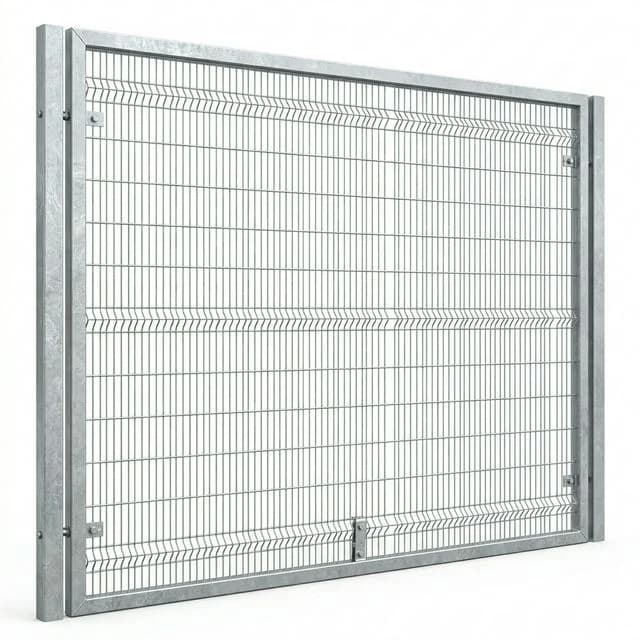
The common public geometry reduces easy finger and toe purchase while keeping visibility. That is why 358 panels sit closer to security mesh than to ordinary welded fence panels in buying behavior.
The numbers below are a synthesis of current supplier pages, not a universal standard. Different markets can use different panel widths, post sizes, and coating stacks.
When the exact project spec matters, treat the public sources as a screening layer and move to supplier drawings before approval.
| Metric | Observed range | How to use it |
|---|---|---|
| Common mesh opening | 76.2 x 12.7 mm | Confirmed on Jacksons, Betafence, and Zaun product pages rechecked April 6, 2026. |
| Typical 358 aperture area (derived) | 967.7 mm2 (~1.50 in2) per opening | Derived from the common 76.2 x 12.7 mm clear opening. This is about one-quarter of the ASTM 6 in2 split between F2453 and F2919 scope boundaries; use as a screening check and confirm final declared standard scope in the bid. |
| Common wire diameter | ~4 mm | Public product pages regularly describe the 358 format around a 4 mm wire. |
| Typical permanent panel width | 2.44 to 2.52 m | Jacksons and Zaun list widths around 2440 mm to 2515 mm. |
| Observed permanent height range | 1.27 to 7.0 m | Jacksons standard range runs to 5210 mm, Betafence offers one-piece panels up to 6.0 m, and Zaun advertises single panels up to 7.0 m on request. |
| Observed temporary height range | 2.0 to 3.0 m | From current temporary 358 literature; not every supplier offers this. |
| Observed temporary base reference | 455 / 910 kg | From the current Zaun RDS StrongHold S455-358 temporary-system PDF; larger bases support higher design wind speeds. |
| Observed temporary design wind speeds | 2.0 m: 80 / 110 mph, 2.4 m: 69 / 96 mph, 3.0 m: 55 / 77 mph | Zaun StrongHold S455/S910 public table: same panel type but different base mass gives materially different wind performance. |
| Temporary fence application baseline (ASTM F3342-19) | 6 ft / 8 ft (1.83 m / 2.44 m) temporary enclosure contexts | ASTM F3342 defines temporary-fence application guidance and flags that local code requirements can add project-specific constraints. |
| Temporary screen/wrap wind boundary | ASTM note: screens can act like a solid barrier; baseline temporary-fence setup in the guide is not capable of 110 mph gusts | ASTM F3342 Note 1 states screened lines may need to be designed as permanent fences (with ASCE/SEI 7-10 reference). |
| Australia site-security anti-climb mesh boundary | No reo mesh and no mesh greater than 75 mm wide | SafeWork NSW site-security checklist states this field control and cites AS 4687-2007 (page metadata modified November 27, 2025). |
| Australia temporary-fencing standards version marker | AS 4687-2007 [Superseded] -> AS 4687.1/.2/.3:2022 [Current] | Standards Australia catalog entries show the edition split; define exact edition/part in procurement to keep conformance claims auditable. |
| AS 4687:2022 conformance-path marker (primary preface) | AS 4687.1:2022 says conformance can be shown by design analysis or physical testing and records the 2007 single document split into Part 1/2/3/4 in 2022 | Standards Australia free preview preface states this revision was initiated after a coronial inquiry and adds expanded wind-action guidance. |
| NSW gust-event operating boundary (temporary structures) | SafeWork NSW guidance calls for weather monitoring, stop-work during sudden/short-term high gust events, wind-loading checks for temporary structures, and securing temporary fencing where mesh is installed | Use as an operational control gate in method statements; combine with the project-specific governing design standard/code basis. |
| US structural code-cycle marker for temporary wind basis | 2024 IBC structural update references ASCE 7-22 (replacing 7-16) | ASCE and ICC 2024 IBC structural-change materials both state this transition; do not treat legacy ASCE references in guidance notes as automatic governing code. |
| US code-adoption variability marker (FEMA BCAT FY2025) | Hazard-resistant benchmark uses 2021+ IBC/IRC without weakened resilience provisions; adoption remains mixed by state/region | FEMA FY2025 BCAT regional factsheets show non-uniform adoption baselines (for example Connecticut versus Kansas), so final wind basis should be locked per AHJ/state record. |
| CNI standards transition marker | CSE removed from approved list from January 1, 2026 | NPSA states CSE is no longer on the approved standards list; avoid writing new security-critical tenders around legacy CSE shorthand. |
| Legacy MFES qualification marker | NPSA: fences and gates are no longer tested to MFES; MFES-rated CSE entries removed from January 1, 2026 | Treat MFES wording as historical context only and map current tenders to active forced-entry standards. |
| NPSA security fence panel height guidance | >=2.4 m baseline; >=3.0 m for higher security | NPSA Security Fences and Gates guidance (last updated August 14, 2025). |
| NPSA anti-climb topping reference | 0.4/0.5 m BTC baseline or 0.6 m for higher security, with max 0.2 m loop spacing | Used where topping is selected and compatible with site health and safety constraints. |
| Coating standard scope boundary | ISO 1461 excludes continuously galvanized wire and welded mesh products | Do not assume one galvanizing standard covers all components in a 358 package. |
| Welded panel construction standard marker | BS EN 10223-7:2012 (Current, Under Review) | BSI lists this as the requirement set for steel wire welded mesh panels for fencing. |
| Wire coating standard marker | BS EN 10244-2:2023 (Current) | BSI scope covers coating mass/properties/testing for zinc or zinc-alloy coatings on steel wire and steel wire products. |
| Paint-system environment classification marker | ISO 12944-2:2017 (will be replaced by ISO/AWI 12944-2) | Use environment-corrosivity classification to align coating strategy with exposure conditions instead of using one generic finish line. |
| Coating lab-test interpretation boundary | ISO 12944-6:2018 states laboratory results are a selection aid (not exact durability); test scope covers C2-C5 and Im1-Im3 environments | Do not convert a lab-pass report directly into service-life guarantees without declared environment class and maintenance assumptions. |
| Forced-entry scope limits (LPS 1175 Issue 8.2) | Excludes vehicle impact, explosion, ballistics, surreptitious entry, plus scaling/tunnelling resistance | Use separate controls when those attack paths are part of the threat model. |
| LPS 1175 attacker-team boundary | A1-E20: one active adversary; F1-H20: two active adversaries | From NPSA Forced Entry Standards Guide (Version 2, June 2024). |
| Vehicle-barrier standards transition marker | ISO 22343-1:2023 replaces withdrawn IWA 14-1:2013 (legacy references still appear) | Use version-explicit wording to keep legacy and current evidence auditable in one tender. |
| VSB deployment-method boundary | ISO 22343-2:2023 guides selection/installation/use and OR definition, and excludes several non-covered paths (for example blast, ballistic, slow-speed abuse, and manual/tool attack) | Treat impact rating as one input. Add OR-based deployment checks and separate controls for excluded pathways. |
| ASTM welded-wire design marker | F3204-16(2024) | ASTM describes F3204 as a design/construction guide for site-specific welded-wire security perimeter barriers. |
| ASTM welded-wire material specification markers | F2453/F2453M-14(2025) + F2919/F2919M-12(2025) | ASTM scopes these as welded-wire mesh fabric specifications (coatings, weld shear, dimensions/tolerances), not stand-alone forced-entry delay ratings. |
| Security chain-link design pathway marker | ASTM F2611-23 (active edition) | ASTM presents F2611 as a security chain-link design/construction guide to increase intrusion delay, but states that it does not address all physical-protection concerns. |
| US chain-link equivalence pathway marker | ASTM F2611-23 + ASTM F1043-18(2022) + ASTM F567-23 | ASTM separates security design intent, framework/coating requirements, and installation practice; one reference alone is not enough for equivalence decisions. |
| Chain-link framework wind-additive caution | ASTM F1043 scope cautions that windscreen/inserts/signage can require stronger framework, reduced post spacing, or back bracing | Treat add-ons as an engineering-change trigger for chain-link alternatives as well as for temporary 358 layouts. |
| Automated gate construction baseline (US) | ASTM F2200-24 (Class I-IV automated vehicular gates) | ASTM F14.15 active list checked April 12, 2026 shows F2200-24 in force for automated vehicular gate construction scope. |
| Industrial gate structure standards (US) | ASTM F900-25 (swing) + ASTM F1184-23e1 (slide) | F14.15 current-series markers keep swing/slide gate structure checks version-explicit in mixed fence-gate packages. |
| US model-code listing marker for gate operators | UL Code Authority cites UL 325 listing references in 2024 IBC/IRC/IFC and NFPA 1/101 pathways | Adoption is jurisdiction-dependent; verify the adopted code cycle and local amendments with the AHJ. |
| UK powered-gate legal handover baseline | Supply of Machinery (Safety) Regulations 2008 pathway: DoC + user instructions in English + conformity marking/labels; some gates also require DoP under CPR | HSE powered-gates basics (last updated October 29, 2024) frames these as customer-entitlement and legal-compliance checks. |
| UK/EU gate product-standard marker | BS EN 13241:2003+A2:2016 (Current, Under Review, Designated) | BSI Knowledge entry flags this as the product standard layer for industrial/commercial/garage doors and gates. |
| UK/EU powered-gate safety-in-use marker | BS EN 12453:2017+A1:2021 (Current) | BSI scope covers safety in use for power operated doors and gates. |
| UK/EU gate mechanical-aspects marker | BS EN 12604:2017+A1:2020 (Current) | BSI scope covers mechanical aspects, requirements, and test methods for industrial/commercial/garage doors and gates. |
| EU machinery legal transition marker | Directive 2006/42/EC applies to machinery placed on EU market before January 20, 2027; Regulation (EU) 2023/1230 is mandatory from January 20, 2027 | Use delivery-lot date logic in EU tenders so declaration packs map to the correct legal basis. |
| US occupied-site egress lock boundary | OSHA 29 CFR 1910.36 + 29 CFR 1926.34 require free, unobstructed inside egress; exit doors must remain unlockable/openable from inside during occupancy | Treat perimeter gate lock logic as a life-safety compliance check, not only a security-control decision. |
| US accessibility gate baseline (where ADA route applies) | ADA 2010: 36 in route clear width (403.5.1), 32 in minimum clear opening and 36 in when opening depth >24 in (404.2.3), and 48 in plus in-swing leaf width for gates in series (404.2.6) | Run ADA geometry checks together with security lock/egress logic when a secured gate is on a required accessible route. |
| US excavation-edge control boundary (temporary works) | OSHA 29 CFR 1926.651 requires edge warning systems for mobile equipment and at least 2 ft setback (or retaining devices) for excavated materials/equipment | Use when temporary fence lines and trench/excavation operations interface on active sites. |
| ASTM forced-entry test-practice marker | F2781-15(2021) | ASTM F14.50 lists F2781 for forced-entry, ballistic, and low-impact resistance testing of security fence systems. |
| Recent gate-incident signal in federal rulemaking record | 13 fatal cases (Sep 2007-May 2024) cited in CPSC 2025 docket comments | Used as risk-screening context only; not a complete national incident dataset for all powered gate categories. |
| Alex Gate Safety Act federal status marker | Congress.gov public tracker latest listed action: May 8, 2025 introduced in Senate and referred to committee | Legislative process is still pre-enactment; treat as directional context and keep enforceable code/standard clauses in active tenders. |
| Laboratory-certificate trust marker | ISO/IEC 17025 competence basis + ILAC MRA signatory-path validation | Use accreditation-body signatory checks and lab scope checks before accepting forced-entry or impact-test claims. |
| EU CPR recast transition marker | Regulation (EU) 2024/3110 applies from January 8, 2026 (Article 92 from January 8, 2027; transitional clauses in Article 95) | For EU fence/gate deliveries spanning years, map declarations and legal basis by lot date instead of one-line CPR statements. |
| US steel-input volatility marker (commercial boundary) | BLS PPI March 2026: SI STEEL3 index 335.342 (+1.7% month over month; +15.6% year over year), and Other fabricated wire products +5.6% year over year | Use index-linked price-adjustment and change-order triggers for longer lead-time projects; do not treat panel-only fixed prices as risk-free. |
| US DOC final AD/CVD rate marker (temporary steel fencing from China) | AD weighted-average margins: 129.70% (separate-rate combinations) / 184.27% (China-wide); AD cash-deposit rates: 129.68% / 184.25%; CVD subsidy rates: 49.19% (Hebei Minmetals and all others) / 178.97% (SD + listed non-responsive firms) | Commerce final determinations published March 16, 2026 for A-570-198 and C-570-199; map exporter/producer entities before landed-cost comparison. |
| US case-record import value trend (temporary steel fencing from China) | $533.1M (2021) -> $617.9M (2022) -> $487.0M (2023) | Commerce final fact sheet cites S&P Global Trade Atlas figures; use for demand/context, not as a project installed-cost benchmark. |
| US AD/CVD scope-coverage boundary marker | Scope includes temporary steel fence panels/stands and third-country processing of China-origin components; exclusion for panel+non-subject-stand package applies only if all listed size/weight criteria are met | Run a scope checklist before assuming duty applicability or exclusion in mixed-kit procurement. |
| US trade-remedy post-ITC publication checkpoint | Federal Register API snapshot (ITA + temporary steel fencing + publication on/after April 10, 2026) returned count 0 at April 28, 2026 check time | Use as a point-in-time operational signal only. Recheck order/cash-deposit status before PO release and customs entry. |
| US provisional-measures execution timing marker | AD notice: suspension discontinued on/after February 15, 2026 pending order-stage reinstatement; CVD notice: provisional suspension expired on/after October 18, 2025 with entity-specific retroactive critical-circumstances handling | Treat final determinations and order-stage execution as separate checkpoints; validate entry-date windows and critical-circumstances treatment before customs filing. |
| Temporary VSB line-layout control | NPSA temporary guidance advises air gaps no wider than 1.2 m between barriers | Barrier ratings apply to tested formations; changed spacing/layout requires revalidation. |
| Temporary VSB dual-rating marker | NPSA guidance recommends both high-speed impact and delay ratings; VADS pass levels are 30 s (minimum) and 60 s (higher tier) | Use both ratings in the same tested formation so impact and repetitive-ramming claims stay comparable. |
| Vehicle Dynamics Assessment (VDA) due-diligence marker | NPSA says VDA is a vital step and should be revisited when on-site, perimeter, or off-site route conditions change | Use VDA as an upstream procurement gate to avoid under-specification exposure or over-specified cost/timescale. |
| Vehicle-barrier crash-test interpretation boundary (US pathway) | ASTM F2656 scope says penetration ratings are test-configuration outcomes and do not guarantee equivalent performance in all site conditions | Use crash-test outcomes as structured evidence, then check local topography, approach routes, and stand-off layout before equivalence claims. |
| Archived CSE 358 variant signal | Single-layer 4 mm, double-skin DS2 (four-panel layering), and Super6 6 mm vertical-wire variants all exist | Do not assume every quote using “358” language is architecturally equivalent. |
| NPSA hostile-vehicle signal | Since 2014: 140+ attacks; 9/10 locations lacked significant barriers | If vehicle-borne threat exists, add VSB/HVM requirements rather than relying on mesh choice alone. |
| Finish options seen publicly | HDG or HDG + polyester powder coat | Supplier options vary by environment, color, and project sector. |
| England planning threshold marker (GPDO Class A) | Adjacent to vehicular highway: typically <=1 m (schools have a specific 2 m clause with visibility condition); elsewhere: <=2 m | Use as an early legality check before RFQ freeze; listed buildings and Article 4/planning conditions can remove permitted-development rights. |
| Devolved UK planning threshold marker | Wales: >1 m by vehicular highway / >2 m elsewhere; Scotland: >1 m within 20 m of a road / >2 m otherwise; Northern Ireland: >1 m adjacent to vehicular road / >2 m elsewhere | Do not copy England-only wording into UK-wide tenders; check local framework clauses and listed-building/conservation limits. |
| Martyn’s Law section-12 consultation timeline marker | SIA launched draft section-12 consultation on April 15, 2026, with a published close date of June 12, 2026; SIA signals expected commencement in Spring 2027 | Treat draft section-12 language as readiness input, then refresh final procurement compliance wording after final guidance and commencement confirmation. |
| Construction-site perimeter legal duty (CDM 2015 Reg 18) | Site perimeter must be identified by suitable signs and/or fenced off where necessary in the interests of health and safety | Treat temporary 358 selection as part of a risk-based site-security plan, not a standalone product swap. |
| Highway-adjacent barbed-wire legal marker (England and Wales) | Highways Act 1980 section 164 allows notices where barbed wire adjoining a highway is likely injurious to lawful users; notice window is 1 to 6 months | Treat anti-climb topping details as a legal/public-interface check, not only a security choice. |
| Road-adjacent topping legal divergence marker (UK) | E&W: Highways Act s.164 (barbed wire, 1 to 6 month notice); Scotland: Roads (Scotland) Act s.93 (barbed wire, electrified fences, spikes/broken glass); NI: Roads Order art.54 (barbed-wire removal/works notice) | Do not reuse one nation’s topping clause in multi-jurisdiction RFQs; legal scope and enforcement pathway differ by statute. |
| Public anti-trespass control marker (HSE CON1-2018) | Perimeter fencing should be continuous/fixed; vulnerable access routes need extra local controls | Useful for residential/public-interface projects where child access risk is material. |
| UFC fence-only delay context (DoD reference) | Chain-link baseline is described as roughly seconds-level delay; clear zones are recommended at 20 ft each side where possible | Use as a caution against “fence alone” assumptions; pair perimeter hardware with detection, response, and layout controls. |
| Project signal | 358 call | Why |
|---|---|---|
| Utility, data, transport, or public-facing perimeter | Strong fit | These sites usually care about visibility, deterrence, and anti-climb geometry enough to justify the heavier panel system. |
| Warehouse boundary with frequent gate traffic | Strong fit if gates are specified early | The fence itself is suitable, but poor gate planning is a common failure point in otherwise good 358 projects. |
| Budget-led low-risk perimeter | Conditional fit | The system works, but it may be more fence than the site needs unless appearance or client policy demands it. |
Standards boundary
What each standard can and cannot answer for a 358 decision.
This matrix separates naming, construction quality, and forced-entry performance so the procurement brief remains auditable.
| Decision focus | What the source layer says | What to do in procurement |
|---|---|---|
| Base fence classification | BS 1722-14:2017 classifies open mesh fences from Category 1 (general purpose) to Category 4 (higher security). | Require category + statement of conformity in the tender pack, not only a “358” label. |
| Forced-entry language | LPS 1175 Issue 8.2 expresses performance as tool set (A to H) plus delay time (1 to 20 minutes), and warns there is no direct correlation to other standards. | For higher-threat procurement, set a target rating band and make sure gates are matched, not just panels. |
| Attacker-team boundary | NPSA forced-entry guidance maps LPS A1-E20 ratings to one active adversary and F1-H20 ratings to two active adversaries. | Write attacker-team assumptions into the threat brief so the selected rating band is defensible. |
| LPS scope exclusions | LPS 1175 Issue 8.2 excludes vehicle impact, explosion, ballistics, surreptitious entry, and scaling/tunnelling resistance from scope. | Do not use an LPS rating as proof for those threat paths. Add separate controls where relevant. |
| Perimeter design baseline | NPSA guidance recommends security fence panel heights of at least 2.4 m, with 3.0 m and stronger topping geometry for higher security. | Treat panel height and topping as first-order design inputs, not post-award extras. |
| CNI standards transition (2026) | NPSA states CSE was removed from the approved standards list from January 1, 2026, and that chain-link fabric is not recommended for CNI. | For new CNI/security-critical tenders, avoid legacy CSE shorthand and define a current standards path with explicit fence-type rationale. |
| Legacy MFES qualification carry-over | NPSA Security Fences and Gates says fences and gates are no longer tested to MFES, and MFES-rated entries were removed from CSE from January 1, 2026. | Reject tender wording that treats MFES labels as current qualification evidence and require active forced-entry standards mapping. |
| US bulk-power applicability boundary (NERC CIP-014-3) | CIP-014-3 is facility-based: 500 kV+, specific 200 to 499 kV connectivity/weighted-value criteria, IROL-critical facilities, and NPIR-essential facilities, with recurring risk-assessment obligations. | Do not write “CIP-compliant fence” as a SKU shortcut. Require asset-screening and risk-assessment evidence tied to the actual facility scope. |
| CIP-014 transition timing boundary (CIP-014-4) | NERC CIP-014-4 implementation plan (formal posting, March 2026) sets effectiveness to first-calendar-quarter timing 24 months after applicable governmental approval (or after NERC Board adoption where approval is not required), with CIP-014-3 retired immediately before effectiveness in each jurisdiction. | Keep standards language version-controlled by jurisdiction/date and avoid assuming one immediate North America-wide transition. |
| Temporary deployment limits | NPSA flags temporary systems as foundation-free and sensitive to wind loading, ground bearing, burrowing, lift gaps, and PIDS compatibility. | Temporary 358 should be specified as a full engineering package (base, wind, terrain, inspection), not as a simple panel substitution. |
| Temporary screening/wrap wind boundary | ASTM F3342-19 says screening can convert temporary fence into a solid barrier and warns the baseline temporary-fence setup in that guide is not capable of 110 mph gusts (ASCE/SEI 7-10 reference). | Treat debris mesh/privacy wrap/signage as a redesign trigger; re-check wind basis before deployment and move to permanent-fence design treatment where required. |
| Australia anti-climb mesh field boundary (construction sites) | SafeWork NSW site-security checklist requires anti-climb material with no reo mesh and no mesh greater than 75 mm wide, citing AS 4687-2007. | Use as baseline field control, then declare exact AS 4687 edition/part in the contract so compliance checks are not ambiguous. |
| Australia temporary-fence standards edition control | Standards Australia marks AS 4687-2007 as superseded and lists AS 4687.1/.2/.3:2022 as current documents. | Do not rely on one legacy citation line in RFQs; specify current part-level conformance (or authority-approved legacy basis) before award. |
| AS 4687 conformance-path boundary (Australia) | AS 4687.1:2022 preface says conformance can be achieved via design analysis or physical testing, with the legacy 2007 document split into a four-part 2022 series. | Require each bid to declare which conformance pathway is used and submit matching evidence (engineering analysis package and/or test reports) before technical award. |
| Temporary wind-response operations boundary (NSW safety guidance) | SafeWork NSW strong-wind alert instructs teams to monitor forecasts, cease work in sudden/short-term gust events, verify wind-loading adequacy of temporary structures, and secure temporary fencing where mesh is installed. | Do not treat wind risk as design-only. Add stop-work triggers, mesh securing checks, and restart criteria into method statements and supervisor sign-off routines. |
| US temporary wind-basis code-cycle boundary | ASCE and ICC 2024 IBC structural-update materials state ASCE 7-22 replaces ASCE 7-16 in that cycle. | Treat older ASCE references in guidance notes as caution markers only and align final wind basis to the adopted local code cycle. |
| US code-adoption heterogeneity boundary (FEMA BCAT FY2025) | FEMA BCAT defines hazard-resistant adoption as 2021+ IBC/IRC without weakened resilience provisions, while regional fact sheets still show mixed baselines (for example Connecticut listed with 2021 IBC/IRC and Kansas with a default 2006 IBC path plus no statewide IRC). | For multi-state delivery, freeze wind and gate basis per AHJ/state adoption record rather than reusing one generic US code assumption. |
| Vehicle-borne threat boundary | NPSA separates perimeter fence decisions from hostile vehicle mitigation (VSB/HVM) where vehicle attack risk exists. | If VAW or VBIED threat is in scope, add VSB/HVM and stand-off requirements in the same procurement package. |
| Vehicle-barrier standards transition | ISO says ISO 22343-1:2023 replaces withdrawn IWA 14-1:2013; NPSA guidance still references both during transition. | Keep standard versions explicit in tender language and do not merge old/new claims without traceable mapping. |
| ISO 22343 draft lifecycle boundary (access-control clauses) | ISO lifecycle pages show ISO/WD 22343-3 marked Deleted at stage 20.98 on March 25, 2026, while ISO 22343-1:2023/DAmd 1 remains Under development at stage 40.60 with close-of-voting dated April 28, 2026. | Do not write deleted or draft-only ISO text as mandatory compliance clauses. Use published ISO 22343-1/-2 references and keep draft items in a monitored watchlist. |
| Vehicle-barrier deployment method boundary | ISO 22343-2:2023 adds application guidance for selection, installation, and use tied to operational requirements (OR), and lists non-covered paths including blast, ballistic impact, slow-speed abuse, and manual/tool attacks. | Treat impact-test outcomes as one evidence layer. Add OR-based deployment checks and separate controls for excluded attack paths. |
| Temporary VSB formation dependency | NPSA temporary VSB guidance states ratings apply to tested conditions only and recommends barrier gaps no wider than 1.2 m. | Treat on-site layout control as part of compliance, not post-install housekeeping. |
| Temporary VSB dual-rating boundary | NPSA temporary barrier guidance says temporary schemes should use both high-speed impact and repetitive-ramming delay ratings, with VADS awarded at 30 seconds (minimum pass) and 60 seconds (higher delay tier). | Do not accept single-rating submissions for high-threat temporary events; require an auditable impact + delay pair in the same tested setup. |
| Vehicle Dynamics Assessment (VDA) boundary | NPSA due-diligence guidance (updated March 17, 2026) describes VDA as a vital step for HVM design and says it should be reviewed when on-site, perimeter, or off-site route conditions change. | Treat VDA as a pre-award gate: freeze threat speed/class assumptions only after competent VDA evidence is reviewed. |
| Vehicle crash-test transferability boundary (ASTM pathway) | ASTM F2656 states penetration ratings come from specified test conditions and do not imply equivalent performance in all site conditions, approach routes, or topography. | When importing impact claims into a fence-adjacent package, require site-condition equivalence checks and stand-off verification before acceptance. |
| Coating scope boundary | ISO 1461:2022 does not apply to continuously hot dip galvanized wire/welded mesh products. | Validate per-component corrosion treatment standards before comparing service-life claims. |
| Welded mesh and wire standard layering | BSI catalogs show EN 10223-7:2012 (welded mesh panels for fencing) as current/under review and EN 10244-2:2023 (zinc/zinc-alloy coatings on steel wire) as current. | Do not accept one-line “galvanized” wording. Ask suppliers to map each component to the declared standard scope. |
| Corrosion-environment classification lifecycle | ISO 12944-2:2017 remains current for environment classification and is marked by ISO to be replaced by ISO/AWI 12944-2. | Anchor coating decisions to explicit environment classification and record the standard revision in tender documentation. |
| Coating laboratory-evidence boundary | ISO 12944-6:2018 states laboratory results are an aid for paint-system selection and not exact durability information; the test scope references C2-C5 and Im1-Im3 environments. | Do not write fixed field-life claims from lab outcomes alone; pair lab evidence with declared environment class and maintenance assumptions. |
| Laboratory accreditation boundary for test reports | ISO/IEC 17025 sets competence requirements for testing/calibration laboratories, and ILAC MRA states confidence depends on accreditation bodies and laboratories meeting internationally recognized criteria. | Before accepting a security test report, validate the lab accreditation scope and accreditation-body signatory path; do not rely on certificate numbers alone. |
| Commercial volatility boundary (steel-input-linked products) | BLS PPI March 2026 shows SI STEEL3 (finished steel mill products including fabricated wire) at +15.6% year over year and other fabricated wire products at +5.6% year over year. | For longer lead-time procurements, use index-linked adjustment clauses and change triggers rather than fixed panel-only assumptions. |
| US trade-remedy status boundary (temporary steel fencing from China, 2026) | Commerce published final affirmative AD/CVD determinations on March 16, 2026, and USITC issued affirmative final injury determinations on April 9, 2026 in investigations 701-TA-754 and 731-TA-1732. | For US imports, add supplier-level case-rate mapping and scenario pricing before PO approval instead of treating duty exposure as a post-award adjustment. |
| US AD/CVD scope-definition boundary (A-570-198 / C-570-199) | Federal Register scope includes temporary steel fence panels and stands, including third-country assembly/processing of China-origin components, with a narrow exclusion for panel/non-subject-stand packages only when all listed size/weight thresholds are met. | Run a documented scope check for each SKU or kit in RFQ normalization to avoid false exclusions and customs-cost surprises. |
| Martyn’s Law tier and commencement boundary (UK) | SIA/Home Office guidance says standard-duty premises (typically 200 to 799 capacity) must implement procedures only, while enhanced-duty premises/events (typically 800+) must also implement reasonably practicable physical measures. Guidance also says there is at least a 24-month implementation period after Royal Assent (April 3, 2025), so legal requirements are expected no earlier than 2027. | Do not treat anti-climb fence purchase as a blanket legal requirement. First classify duty tier and commencement timing, then scope procedure and physical-measure obligations separately. |
| Martyn’s Law event-area scope boundary (UK) | Home Office statutory guidance says event duty scope is tied to entry controls plus a well-defined secure perimeter where 800+ attendees may be present at the same time. Open public roads/pavements/parks are generally out of scope unless in the immediate vicinity and under event control. | Map controlled footprint boundaries before procurement. Avoid applying one perimeter treatment to mixed layouts that include both ticketed and open public areas. |
| Planning/permitting boundary (England) | GPDO 2015 Class A sets explicit height limits for gates/fences/walls, with different limits near vehicular highways and specific listed-building constraints. | Treat legal-permission checks as a pre-order control gate for height, alignment, and boundary scope. |
| Barbed-wire topping boundary (England and Wales) | Highways Act 1980 section 164 allows a competent authority to require abatement where barbed wire on land adjoining a highway is likely to injure lawful users (people or animals). | If anti-climb topping is proposed on a highway-adjacent line, run a legal/public-interface review before procurement freeze. |
| Road-adjacent topping legal scope divergence (UK) | England/Wales section 164 targets barbed-wire nuisance with a one-to-six-month notice window; Scotland section 93 also covers electrified fences and spike/broken-glass devices; NI article 54 uses a barbed-wire danger test with removal/works notice. | For multi-jurisdiction delivery, map topping design and legal checks to the specific statute before final issue of technical and method documents. |
| Devolved UK planning boundary | Wales, Scotland, and Northern Ireland publish related but non-identical fence/gate thresholds and legal triggers. | For UK-wide procurement, keep jurisdiction-specific planning checks instead of copying one nation’s threshold note. |
| Construction site security duty | CDM 2015 Regulation 18 requires a construction site to be perimeter-identified and/or fenced off where necessary, in line with risk. | Specify temporary 358 with operational controls (fencing continuity, access-point control, inspections), not just panel SKU details. |
| Gate security versus emergency egress | NPSA gate guidance notes that gate security controls still need to satisfy legal emergency egress/access requirements. | Gate locking and access policy must be reviewed with fire and emergency procedures before acceptance. |
| Automated gate safety stack (US pathway) | ASTM F14.15 currently lists F2200-24 for Class I-IV automated vehicular gate construction, alongside F900-25 and F1184-23e1; UL Code Authority summarizes UL 325 listing references across 2024 IBC/IRC/IFC and NFPA 1/101 pathways. | If powered gates are in scope, require a dedicated gate-compliance submission and verify adopted code cycle with the AHJ. |
| UK powered-gate legal handover boundary | HSE powered-gates basics says customers should receive a Declaration of Conformity and comprehensive user instructions in English, with conformity marking/labels, under the Supply of Machinery (Safety) Regulations 2008; some gates also need a Construction Products Regulation Declaration of Performance. | Treat handover documents as a hard acceptance gate. Do not release purchase or handover on fence evidence alone. |
| UK/EU powered-gate standards layering | BSI entries show EN 13241 (product layer, designated), EN 12453:2017+A1:2021 (safety in use), and EN 12604:2017+A1:2020 (mechanical requirements) as current references. | Use a three-layer standard matrix in tenders and require version-specific declarations in each supplier submission. |
| Gate terminology boundary (consumer safety scope versus perimeter security scope) | Federal Register direct final rule 2026-06306 (published April 1, 2026) updates 16 CFR part 1239 to ASTM F1004-25 effective July 19, 2026, for children's expansion gates and expandable enclosures. | Do not treat ASTM F1004/16 CFR 1239 as perimeter security gate evidence; keep child-safety gate compliance separate from forced-entry and site gate-security pathways. |
| UK escape-route exit-device evidence boundary | UK Notice of Publication 0123/25 (September 26, 2025) includes EN 179 and EN 1125 references, while BSI entries list BS EN 179:2008 as Current and BS EN 1125:2008 as Current, Under Review. | Where perimeter gates are on escape routes, declare exit-device class and evidence explicitly (EN 179 lever/push-pad versus EN 1125 horizontal bar) instead of relying on generic gate-standard shorthand. |
| EU machinery legal transition boundary | European Commission machinery guidance says Regulation (EU) 2023/1230 applies on a mandatory basis from January 20, 2027, while machinery placed on the EU market before that date follows Directive 2006/42/EC. | For EU-powered gate packages, declare legal basis by placement date and avoid mixed reference sets in one conformity pack. |
| EU Construction Products Regulation recast transition boundary | EUR-Lex Regulation (EU) 2024/3110 applies broadly from January 8, 2026, applies Article 92 from January 8, 2027, and keeps transition clauses in Article 95. | For EU fence/gate deliveries spanning years, map CPR legal basis and declaration pathways by lot date instead of using one-line “CPR compliant” wording. |
| US occupied-site egress boundary | OSHA 29 CFR 1910.36 requires unlocked/openable exit-route doors from inside; OSHA 29 CFR 1926.34 requires free and unobstructed egress in occupied construction structures. | Review security lock logic against emergency egress before final gate-control approval. |
| US accessibility geometry boundary for secured gates | ADA 2010 sets route/gate dimensions where accessible routes apply: 403.5.1 (36 in route width), 404.2.3 (32 in clear opening minimum, 36 in where opening depth exceeds 24 in), and 404.2.6 (48 in plus in-swing leaf width for gates in series). | When secured gates are on required accessible routes, run ADA geometry checks alongside security and egress design reviews before procurement freeze. |
| US excavation-edge controls (temporary works) | OSHA 29 CFR 1926.651 requires warning systems where equipment works near excavation edges without clear direct view, and requires excavated materials/equipment at least 2 ft from edges or protected by retaining devices. | Where trench/excavation work intersects temporary fencing, add edge-control method statements to procurement and site acceptance checks. |
| Federal legislative status boundary (Alex Gate Safety Act) | Congress bill tracker public page shows latest listed action on May 8, 2025 (introduced in Senate and referred to committee), and the bill remains pre-enactment. | Do not label pending legislation as mandatory law in tenders; write enforceable standards and jurisdiction checks directly. |
| Martyn’s Law pre-commencement commercial-claim boundary | SIA April 2026 proportionate-approach notice says Martyn’s Law is not yet in force and warns that products/services claiming guaranteed future compliance at this stage are unlikely to be wise investment decisions. | Do not normalize bids using “guaranteed Martyn compliance” marketing language. Use section-27 guidance plus site-specific duty-tier assessment as the procurement baseline. |
| Security chain-link counterexample boundary | ASTM F2611-23 is an active security chain-link design/construction guide intended to increase intrusion delay, but explicitly does not address all physical-protection concerns. | Do not model 358 vs chain link as a simple commodity split. Compare using a threat-based equivalence matrix with explicit delay and system-scope assumptions. |
| Chain-link equivalence requires three ASTM layers | ASTM F2611 covers security design intent, ASTM F1043 sets framework/coating and wind-additive constraints, and ASTM F567 sets installation practice. | If chain link is shortlisted against 358, request all three layers in one submission before acceptance or price equivalence checks. |
| ASTM design-guide versus test evidence boundary | ASTM F3204-16(2024) is a welded-wire design/construction guide, while ASTM F2781-15(2021) covers forced-entry/ballistic/low-impact testing practice. | In cross-market bids, separate design guidance from performance testing evidence and build an explicit equivalence matrix. |
| ASTM welded-mesh material-spec versus security-performance boundary | ASTM F2453 covers welded-wire mesh fabric at 6 in.2 or less while F2919 covers variable patterns or greater than 6 in.2; both are material-layer specifications, while ASTM F2781 is the forced-entry/ballistic/low-impact testing practice for security fence systems. | Do not accept F2453/F2919 conformance alone as proof of intrusion delay. Require a separate security-performance pathway in award criteria. |
| Framework | Current signal | Applies when | Buyer action |
|---|---|---|---|
| UK SI 2015/596 GPDO Class A (gates, fences, walls etc.) | England permitted-development height limits are typically 1 m near a vehicular highway and 2 m elsewhere, with listed-building and school-specific clauses. | England projects where teams rely on permitted-development rights instead of full planning consent. | Run a permit screen at concept stage; if the project sits outside Class A limits/conditions, secure planning before procurement freeze. |
| SafeWork NSW site-security checklist (construction sites) | SafeWork NSW fencing checklist requires anti-climb material with no reo mesh and no mesh greater than 75 mm wide, and cites AS 4687-2007 in that control line. | New South Wales construction sites where temporary fencing is used to prevent unauthorized access when the site is unattended. | Use the 75 mm/no-reo rule as a minimum field gate, then record which AS 4687 edition/part is contractually accepted for supplier submissions. |
| Standards Australia AS 4687 version control | Standards Australia lists AS 4687-2007 as superseded and AS 4687.1:2022 / AS 4687.2:2022 / AS 4687.3:2022 as current. | Australian temporary-fencing or hoarding procurement where documentation still uses one-line AS 4687-2007 shorthand. | Set edition + part-level conformance requirements in tender conditions and resolve legacy-citation exceptions before award. |
| NSW SEPP (Precincts—Regional) Amendment 2022, Schedule 3 sections 28-29 | For community-event temporary structures in the Kosciuszko Alpine Region, structures must resist AS/NZS 1170.2 wind actions, and temporary construction site fence on/adjoining a public place must be designed and installed to AS 4687.1:2022 / AS 4687.2:2022 / AS 4687.3:2022. | NSW Alpine Region community-event deployments using temporary construction site fencing in or adjoining public places. | If in scope, cite the clauses directly in the technical brief; outside this scope, treat it as statutory evidence that 2022 AS 4687 parts are already codified in at least one NSW pathway. |
| Highways Act 1980 section 164 (barbed wire adjoining a highway) | For England and Wales, competent authorities can serve notice where barbed wire on land adjoining a highway is likely injurious to lawful users (people or animals), with an abatement window between one and six months. | Highway-adjacent anti-climb topping choices (for example barbed-wire-style top details) are being finalized. | Treat topping details as a legal/public-interface gate and clear competent-authority expectations before final issue of the fence specification. |
| Roads (Scotland) Act 1984 section 93 (roadside dangers) | Scotland allows roads authorities to issue notice where barbed wire, electrified fences, or spike/broken-glass style devices adjoining a road are likely injurious to lawful users; notice period is authority-specified. | Scotland projects where anti-climb topping or electrified deterrent details are proposed near road users. | Run a section-93 legal check and document topping type explicitly (barbed, electrified, spiked) before procurement freeze. |
| Roads (Northern Ireland) Order 1993 article 54 (removal of barbed wire) | Northern Ireland allows the Department to require removal of barbed wire or works to prevent danger where barbed wire on land adjoining a road is likely dangerous to persons or animals using the road. | Northern Ireland highway-adjacent boundaries where barbed-wire-style topping is being considered. | Treat article-54 review as a formal legal gate before final issue and define a response path if mitigation/removal notice is served. |
| Welsh Government planning guidance (fences, gates, garden walls) | Planning permission is required if fences/gates/walls exceed 1 m next to a highway used by vehicles (or its footpath) or exceed 2 m elsewhere; Article 4 and listed-building constraints can also remove permitted rights. | Wales projects where teams intend to rely on householder-style permitted-development rules. | Add a Wales-specific planning gate and confirm any Article 4/planning-condition overrides before fixing perimeter heights. |
| Scotland Circular 1/2024 Class 7 (gates, fences, walls) | For new fences/gates/walls, the maximum is 2 m, but within 20 metres of a road the maximum is 1 m; replacement to original height is treated separately. | Scotland projects with road-adjacent boundaries, especially where teams assume UK thresholds are identical. | Screen road-distance and listed-building/conservation constraints in the early design brief before issuing a final RFQ. |
| Northern Ireland GPDO 2015 Part 3 Class A (minor operations) | Development is not permitted where enclosure height exceeds 1 m adjacent to a road used/designed for vehicular traffic or exceeds 2 m elsewhere, with listed-building/private-street exclusions. | Northern Ireland projects using permitted-development assumptions for boundary works. | Check NI Class A triggers and exclusions directly in tender notes before approving final fence and gate heights. |
| UK CDM 2015 Regulation 18 (Good order and site security) | Construction sites must be perimeter-identified by suitable signs and/or fenced off where necessary in the interests of health and safety. | Construction projects with public interface, out-of-hours exposure, or elevated site-access risk. | Tie fence scope to the principal contractor site-security plan and define ongoing perimeter inspection responsibilities. |
| UK Terrorism (Protection of Premises) Act 2025 (Martyn’s Law) duty-tier and commencement boundary | SIA/Home Office guidance states standard-duty premises (typically 200 to 799 capacity) have no legal requirement for physical measures, while enhanced-duty premises/events (typically 800+) include reasonably practicable physical measures. Guidance also states there is at least a 24-month implementation period after Royal Assent on April 3, 2025, with legal requirements expected no earlier than 2027. | UK public-facing premises/events where anti-climb perimeter spend is being justified as legal compliance. | Classify standard versus enhanced duty first, confirm commencement assumptions, and separate procedure obligations from physical-security procurement before award. |
| SIA section-12 guidance consultation status (Martyn’s Law) | SIA news states draft section-12 guidance consultation launched April 15, 2026, closes June 12, 2026, and indicates the law is expected to come into force in Spring 2027. | Teams try to freeze final compliance wording while section-12 guidance is still in consultation and pre-commencement. | Use draft section-12 text for readiness planning only, and schedule a final clause refresh when the final section-12 guidance and commencement timetable are confirmed. |
| SIA proportionate-approach notice (April 2026) for Martyn’s Law preparation | SIA states the Act is not yet in force and warns that buying products/services now that claim to guarantee future compliance is unlikely to be a wise investment until guidance and site-specific scope are aligned. | Commercial teams are asked to buy pre-packaged “compliance solutions” before final section-12 and commencement detail is fixed. | Use Home Office section-27 guidance for current readiness, reject blanket guarantee claims, and require site-specific duty-tier mapping before approval. |
| UK Home Office statutory guidance event-area scope (Martyn’s Law) | Statutory guidance says qualifying event scope depends on entry controls and a well-defined secure perimeter with 800+ expected attendance. Open public roads/pavements/parks are generally not in scope unless in the immediate vicinity and under event control. | Events with mixed footprints (ticketed zones plus open public realm) where one temporary-fence package is being applied site-wide. | Draw the in-scope controlled footprint before procurement and split controls for in-scope versus open public areas in the security and operations plan. |
| Martyn’s Law education-settings special-consideration boundary (UK) | GOV.UK education guidance says all education settings fall under standard duty regardless of capacity, with early years/schools/further education generally outside scope under 200 persons; legal requirements are not in force until commencement. | School, college, or campus projects where 358 perimeter decisions are framed as immediate statutory obligations. | Keep safeguarding controls active now, but map legal duty tier and occupancy evidence explicitly before treating fence upgrades as statutory compliance spend. |
| HSE Safety Alert CON1-2018 | Perimeter fencing should be continuous and fixed, with gaps minimised; vulnerable areas may need local fencing and controlled ladder access. | Scaffold and temporary works where children/public access risk is credible. | Specify continuity at fence interfaces, out-of-hours access controls, and escalation procedures after any trespass event. |
| NPSA Fences and Gates (updated November 10, 2020) | Security measures for gates should still satisfy legal emergency egress and access requirements, and gate effectiveness should be reviewed regularly. | Any perimeter using controlled gates as a key security control point. | Approve gate specification only after joint security + emergency-use validation, including operational testing and maintenance checks. |
| HSE powered gates basics + Supply of Machinery (Safety) Regulations 2008 | HSE states powered gates are subject to machinery safety law and customers should receive a Declaration of Conformity and comprehensive user instructions in English, with conformity marking/label checks; some gates also require a Construction Products Regulation Declaration of Performance. | UK projects with powered vehicular or pedestrian gates in the perimeter package. | Make gate handover documents a contractual acceptance gate (DoC, instructions, marking evidence, and DoP where applicable) before practical completion. |
| EU Machinery Directive/Regulation transition (2006/42/EC -> (EU) 2023/1230) | European Commission machinery guidance states Regulation (EU) 2023/1230 becomes mandatory from January 20, 2027, and machinery placed on the EU market before that date must comply with Directive 2006/42/EC. | EU projects with powered gates delivered across multi-year procurement windows. | Require suppliers to declare legal basis per delivery lot and align instructions/declarations to the applicable framework date. |
| EU Regulation (EU) 2024/3110 (Construction Products Regulation recast) | EUR-Lex Article 96 sets broad application from January 8, 2026 (Article 92 from January 8, 2027), while Article 95 keeps transition windows for legacy harmonized standards and EAD-linked declarations. | EU fence/gate procurement where contract award, manufacturing, and delivery cross the CPR transition window. | Write date-mapped CPR clauses (lot date, declaration route, and supporting technical specification) instead of one-line CPR language. |
| US OSHA egress rules (29 CFR 1910.36 + 29 CFR 1926.34) | OSHA requires free and unobstructed emergency egress during occupancy; exit-route doors must be unlocked/openable from inside without keys, tools, or special knowledge. | US occupied workplaces and construction structures where perimeter security controls include lockable gates or controlled exits. | Validate gate lock logic and emergency-release operation against OSHA egress requirements before handover and operations go-live. |
| US ADA 2010 accessibility geometry (Sections 403.5.1, 404.2.3, 404.2.6) | Where an accessible route is required, ADA geometry sets minimum route width and gate/door clearances, including in-series gate spacing logic. | US public-facing or workforce-access routes where secured pedestrian gates sit on required accessible paths. | Require route-marked gate drawings showing ADA width/series checks before finalizing lock hardware and controlled-entry layouts. |
| US OSHA excavation controls (29 CFR 1926.651) | When equipment operates adjacent to excavation edges without clear direct view, warning systems are required; excavated materials/equipment must be kept at least 2 ft from edge or protected by retaining devices. | Temporary fence lines, access routes, and trench/excavation works overlap on active construction projects. | Add excavation-edge controls to the fence deployment method statement and reject layouts that omit edge-warning and spoil/setback controls. |
| US 2024 IBC structural reference transition | ASCE and ICC structural-change materials state the 2024 IBC transition includes ASCE 7-22 replacing ASCE 7-16. | US projects where temporary-fence wind assumptions are copied from guidance notes that still mention older ASCE editions. | Confirm the adopted local code cycle with the AHJ and align structural wind calculations to that governing edition before approval. |
| NERC CIP-014 applicability and transition boundary (bulk-power physical security) | CIP-014-3 applies through facility criteria (500 kV+, specified 200 to 499 kV connectivity/weighted-value paths, IROL-critical, and NPIR-essential facilities) with recurring reassessment cadence. CIP-014-4 implementation planning sets first-calendar-quarter effectiveness 24 months after applicable-government approval (or after NERC Board adoption where approval is not required), with CIP-014-3 retired immediately before effectiveness in each jurisdiction. | US/Canadian utility or CNI perimeter projects reference CIP language to justify anti-climb fence scope. | Require documented facility-applicability screening, keep jurisdiction-specific effective-date checks, and avoid treating “CIP-compliant fence” as a stand-alone product claim. |
| US CISA CFATS statutory-status boundary (6 CFR Part 27) | CISA states CFATS statutory authority expired on July 28, 2023 and therefore CISA cannot enforce CFATS compliance at this time (including CSAT reporting, inspections, and Site Security Plan enforcement). | Chemical-facility perimeter procurement or consulting proposals still use CFATS as an active federal compliance label. | Do not treat CFATS as a currently enforceable mandate; document site-specific control measures, use voluntary ChemLock pathways where relevant, and set a reauthorization checkpoint before issuing mandatory-compliance claims. |
| US DOC/USITC trade-remedy boundary for temporary steel fencing from China | Commerce final AD/CVD determinations were published March 16, 2026 for A-570-198/C-570-199, and USITC published affirmative final injury determinations on April 9, 2026 for 701-TA-754/731-TA-1732. Federal Register posted ITC determinations notice 2026-08678 on May 5, 2026, and USITC Publication 5727 is now publicly posted. Case-code API snapshots for A-570-198/C-570-199 published on/after March 17, 2026 still showed zero records as of May 8, 2026, so order-stage execution status remains a live check item. | US procurements involve China-origin temporary steel fence panels/stands, including third-country processing of China-origin components. | Map supplier legal entities to case rates, run Federal Register scope checks (including exclusion criteria), and refresh case-status execution details before PO release. |
| US AHJ code-cycle adoption for powered gates | UL Code Authority maps UL 325 listing references in 2024 IBC/IRC/IFC and NFPA 1/101 pathways, but adoption timing varies by jurisdiction. | US projects with powered vehicular gates where teams assume one national code baseline. | Confirm adopted code edition, local amendments, and listing requirements directly with the AHJ before freezing gate hardware scope. |
| US CISA Vehicle Ramming Action Guide (as of March 2025) | CISA guidance says hostile-vehicle controls are site-specific and calls for standoff zones plus barrier choices (passive and/or active), with barrier sizing/anchoring aligned to impact loads. | US crowd-facing or critical-infrastructure perimeters where anti-climb fencing is considered part of a broader hostile-vehicle risk package. | Do not treat anti-climb fence geometry as a stand-alone vehicle control. Add a documented standoff and barrier strategy before procurement freeze. |
| ISO 22343-2:2023 (Vehicle security barriers, Part 2) | Part 2 defines application guidance around operational requirements (OR), selection, installation, and use, and explicitly lists non-covered attack/abuse paths in scope boundaries. | Projects using VSB ratings in the same package as anti-climb perimeter upgrades or temporary high-threat deployments. | Add OR documentation and excluded-path controls to VSB submissions instead of accepting impact rating lines as complete deployment evidence. |
| ISO lifecycle status for access-control clauses (ISO/WD 22343-3 and ISO 22343-1:2023/DAmd 1) | ISO marks ISO/WD 22343-3 as Deleted at stage 20.98 (project deleted on March 25, 2026), while ISO 22343-1:2023/DAmd 1 remains Under development at stage 40.60 (close of voting dated April 28, 2026). | Tender packs attempt to cite unpublished or deleted ISO text as if it were an enforceable current standard for VSB access-control planning. | Keep contractual requirements on published ISO 22343-1/-2 references, and track draft lifecycle updates as watch items until publication. |
| DoD UFC 4-022-03 (published October 1, 2013) | The guide frames fence delay as limited, seconds-level baseline performance and recommends clear zones (20 ft each side where possible) in the wider security system design. | DoD-style perimeter design context or when teams need a public baseline against fence-only assumptions. | Treat geometry as one layer in a detection-response architecture, and document where local policy supersedes UFC-era baseline assumptions. |
| Evidence layer | What it confirms | What it does not confirm | Required procurement action |
|---|---|---|---|
| Geometry label ("358 welded mesh") | Small-aperture anti-climb intent and nominal mesh family characteristics. | Certified forced-entry delay rating, attacker-team assumptions, or vehicle-impact resistance. | Pair geometry with named performance standards and explicit gate/system scope. |
| LPS 1175 Issue 8.2 rating | Manual forced-entry resistance for the tested product assembly with defined tool category and delay time. | Vehicle impact, explosion, ballistics, surreptitious entry, or scaling/tunnelling resistance. | Keep LPS target for forced entry, then add separate controls for excluded attack pathways. |
| ASTM F3204-16(2024) design guide | A welded-wire security perimeter design/construction framework for selecting system components in a site-specific layout. | Certified forced-entry delay or a complete physical protection outcome by itself. | Pair design-guide language with explicit test evidence (for example ASTM F2781 or an equivalent forced-entry framework) before award. |
| ASTM F2453/F2919 welded-wire material specifications | Fabric-level conformance for welded-wire mesh properties such as coating type/performance, weld shear, and dimensional tolerances. | Threat-specific intrusion delay, attacker-team assumptions, or full security-system performance. | Treat F2453/F2919 as material-layer evidence and require a separate forced-entry pathway (for example ASTM F2781 or LPS target) before award. |
| ISO 22343-1 / IWA 14 impact claim | Vehicle-impact behavior for the tested barrier format under the specified test conditions. | Manual attack delay unless separately tested, or deployment suitability when operational requirements and formation/site conditions diverge. | Request test-configuration evidence, pair impact rating with delay-rating requirement, and add ISO 22343-2 operational-requirements checks before award. |
| Variant example | What changes in the system | Decision impact |
|---|---|---|
| Single-layer 358 baseline (NPSA CSE Securus listing) | 4 mm nominal wire panel, 76.2 x 12.7 mm mesh, with 2.520 m post centres and clamp-bar fixing on the listed build-up. | Useful as a baseline, but not a universal template for every “358” quote. |
| Double-skin DS2 358 (NPSA CSE Betafence listing) | Two pairs of double horizontal-wire panels (four panels thick total), mounted with 90-degree orientation to form a layered system. | Material and installation complexity differ materially from single-layer systems, so direct price equivalence is unsafe. |
| Super6 welded mesh (NPSA CSE listing) | Described as similar in concept to 358 but with 6 mm vertical wires and BS 1722-14 context in the listing notes. | Shows that anti-climb-style mesh families can change wire architecture and cut-resistance tradeoffs. |
| When this is true | Do not assume | What fails if ignored | Minimum executable path |
|---|---|---|---|
| Threat model includes VAW/VBIED | 358 geometry alone controls vehicle-borne attack risk | The site can pass fence procurement but still fail vehicle-threat mitigation. | Add VSB/HVM line, stand-off logic, and vehicle-threat assumptions in the same brief. |
| US crowd-facing perimeter relies on anti-climb fence only | Fence geometry alone is enough vehicle-threat control for high-occupancy interfaces | Hostile-vehicle pathway remains under-controlled even though the fence package appears stronger on paper. | Apply CISA hostile-vehicle workflow: define standoff zones, choose passive/active barriers as needed, and verify barrier sizing/anchoring for impact loads. |
| Vehicle attack speed/class is assumed without a VDA | Default speed and approach assumptions are accurate enough for barrier selection | Barrier selection can be under-specified for real approach routes or over-specified with avoidable cost and delivery delay. | Run competent VDA due diligence and re-check it when site/perimeter/off-site conditions change before final barrier choice. |
| Temporary VSB certificate set includes only one rating type | Impact-only or delay-only evidence is sufficient for high-threat temporary layouts | The scheme may pass one attack mode but still fail the other at runtime. | Require both high-speed impact and repetitive-ramming delay evidence in the same tested formation, with explicit VADS duration tier. |
| VSB package is selected from impact ratings only | Impact-test evidence alone is enough to prove deployment suitability in the real operating context | Barrier choice can miss OR-specific constraints and excluded threat paths, creating hidden performance gaps. | Add an ISO 22343-2 application check: operational requirements, deployment assumptions, and explicit handling for excluded attack/abuse paths. |
| Tender language still written around legacy CSE | CSE wording is still current for new CNI procurement | Spec ambiguity, delayed approvals, and hard-to-compare supplier responses. | Use current NPSA-aligned forced-entry/perimeter language and map each clause to an explicit threat. |
| US utility tender cites CIP-014 without facility-applicability evidence | A 358 fence specification alone is enough to satisfy CIP-014 obligations | Critical-facility identification and reassessment duties can be missed, creating assurance and audit exposure. | Require documented CIP applicability path (criteria trigger, facility list, cadence, and jurisdiction/version timing) before accepting CIP language in procurement claims. |
| Bid claims a current “CFATS-compliant” perimeter package | CFATS enforcement is still an active federal mandate for procurement labeling | Commercial and compliance language becomes non-equivalent after statutory expiry, increasing legal and governance risk. | Replace blanket CFATS-compliant claims with explicit site-control scope, record statutory-expiry date, and add a reauthorization-triggered clause refresh checkpoint. |
| Supplier offers “guaranteed Martyn’s Law compliance” package before commencement | A generic product/consultancy bundle purchased now can guarantee future legal compliance for any site | Spend can be misallocated before final regulator workflows and site-specific duty/scope mapping are complete. | Anchor readiness on Home Office section-27 guidance, classify duty tier and site context first, and refresh contractual compliance clauses when final section-12 plus commencement timing are confirmed. |
| Tender reuses legacy MFES labels as active qualification evidence | Historical MFES wording can still serve as a current acceptance shortcut | Qualification logic can fail assurance review even when suppliers appear compliant on paper. | Treat MFES labels as legacy-only context and remap requirements to active forced-entry standards before issue. |
| Security rating copied without scope check | LPS 1175 rating covers covert entry, climb-over, and tunnelling | Uncovered attack paths remain outside the tested performance scope. | Pair rating target with anti-scale, anti-burrow, detection, and response requirements. |
| Vehicle-threat requirement uses mixed legacy/current barrier claims | IWA 14 and ISO 22343 claims are automatically equivalent without version mapping | Supplier responses become hard to compare and assurance can fail at review. | Request standard/version declarations and map impact + delay claims to one threat-based acceptance matrix. |
| Tender cites ISO/WD 22343-3 as mandatory access-control evidence | A deleted working draft can be enforced as a current compliance standard | Supplier submissions become non-comparable and contractual evidence checks can fail at assurance review. | Use published ISO 22343-1/-2 clauses for enforceable scope, and keep draft/amendment lifecycle items as monitored watchpoints until publication. |
| Quote uses “358” wording but omits wire architecture | Single-layer 358 and reinforced variants are directly interchangeable | Panel, support, and cost assumptions drift between bidders. | Require layer count, wire diameter pattern, panel mass, and post/bracing schedule in the first submission. |
| Temporary deployment on open or sloped ground | Temporary 358 behaves like a standard panel-and-base swap | Lift gaps, wind instability, and redesign after mobilisation. | Define base mass, post centres, slope-gap treatment, and inspection criteria pre-award. |
| Temporary fence line receives debris netting/privacy mesh/signage after approval | Screening is cosmetic and does not change structural behavior | Wind response can change enough to invalidate the approved temporary-fence setup. | Trigger an engineering change review and wind-basis recheck before installing screens; use a permanent-fence design basis where required. |
| Australian tender cites AS 4687-2007 without edition/part control | A legacy one-line citation is automatically equivalent to current temporary-fencing conformance requirements | Supplier submissions can use different conformance pathways, making bids non-comparable and acceptance criteria ambiguous. | State required AS 4687 edition and part (for example Part 1/2/3:2022 scope) or document authority-approved legacy basis before technical evaluation. |
| Temporary wind basis is copied from ASTM note language only | ASCE 7-10 reference notes in guidance documents are the governing code basis for current projects | Wind design checks can fail adopted code-cycle review, causing rework late in engineering or permitting. | Verify adopted local code cycle with the AHJ and align wind calculations to the governing standard edition before award. |
| US multi-state rollout uses one code-edition baseline for all sites | A single “US standard” adoption state is enough for temporary wind and powered-gate compliance decisions | One site can pass while another fails AHJ review because state/local adoption and amendments are not equivalent. | Use FEMA BCAT as a screening signal, then confirm AHJ-adopted code edition and local amendments for each site before issuing one normalized scope set. |
| England project exceeds simple boundary-height limits | Fence and gate height can be fixed at design stage without planning-gate checks | Late permitting friction and possible forced redesign after supplier engagement. | Screen against GPDO Class A and listed-building constraints before locking the final perimeter height. |
| Highway-adjacent topping uses barbed-wire-style detail | Anti-climb topping can be finalized as a technical detail without section-164 nuisance checks | Possible enforcement notice, redesign, and schedule disruption after installation planning starts. | For England and Wales, review Highways Act 1980 section 164 exposure with the competent authority before issuing the final topping specification. |
| UK multi-jurisdiction rollout uses one topping legal note | England/Wales section-164 wording automatically satisfies Scotland section 93 and NI article 54 checks | Barbed, electrified, or spike-style details can pass template review but fail local legal controls late in delivery. | Map topping choices to the jurisdiction-specific statute (s.164 / s.93 / article 54) before tender issue and site method statements. |
| UK-wide tender uses one planning note for all jurisdictions | England, Wales, Scotland, and Northern Ireland share the same fence-height trigger language | Permitting logic fails in one or more jurisdictions and creates avoidable redesign/approval delay. | Carry jurisdiction-specific planning checks in the scope matrix and confirm local trigger clauses before RFQ release. |
| Project labels a perimeter package as “Martyn’s Law compliant” based on fence hardware only | Buying anti-climb temporary fence alone satisfies duty requirements across all UK premises/events | Procedure obligations, tier checks, and commencement timing can be missed, creating false assurance and mis-scoped spend. | Classify duty tier first, confirm commencement timeline, and document required procedures separately from any physical measures before issuing procurement claims. |
| Tender freezes section-12 wording from draft guidance as final legal requirement | Consultation-stage section-12 text is already fixed and can be treated as final compliance language | Award documentation may drift from final statutory guidance, causing avoidable legal rework and procurement delay. | Track section-12 consultation milestones, mark draft wording as provisional, and run a final guidance/commencement refresh before contract signature. |
| Event footprint mixes ticketed zones and open public streets but uses one perimeter scope | All surrounding public realm is automatically in-scope under Martyn’s Law event duties | Controlled zones can be under-protected while open areas are over-scoped, reducing decision quality and raising cost. | Define entry-control points and secure-perimeter boundaries first; then map immediate-vicinity controls and open-public-area controls as separate workstreams. |
| Corrosion scope is described only as “galvanized to ISO 1461” | One galvanizing standard line is enough for all welded-wire mesh components | Wire/panel/hardware standards can be misaligned, weakening acceptance criteria and warranty comparability. | Request component-by-component standard declarations (for example wire coating and welded panel standards) and verify exclusions. |
| Durability claim is based on lab output only | Laboratory pass/fail results can be translated directly into exact field-life commitments | Lifecycle cost and maintenance assumptions become non-equivalent across bidders. | Require ISO 12944 environment class declarations and maintenance assumptions, then treat lab results as comparative evidence. |
| Test report is submitted without accredited-lab scope traceability | A certificate number or PDF header is enough proof of test credibility | Reports can look formal but still be out-of-scope or weak for equivalence decisions. | Verify issuing lab competence basis (ISO/IEC 17025), accreditation-body signatory path, and method-scope match before accepting performance claims. |
| EU quote says “CPR compliant” without date-mapped transition path | One generic CPR statement is equivalent across 2025-2027 delivery lots | Declaration routes can diverge by lot date and create avoidable acceptance disputes. | Use Regulation (EU) 2024/3110 date-explicit clauses (Article 95/96/92 checkpoints) and require lot-level declaration mapping in submissions. |
| Long-lead 358 contract uses fixed pricing without index trigger | Upstream steel-linked inputs are stable enough for panel-only fixed pricing | Late price tension, scope reduction pressure, or quality-risk substitutions can emerge mid-delivery. | Add an index-linked adjustment clause with clear trigger bands and change-order logic (for example against published BLS PPI series). |
| US import bid includes China-origin temporary steel fencing but skips AD/CVD case mapping | Panel or EXW pricing can be normalized first and trade-remedy exposure can be handled after award | Commercial ranking can invert after duty/scope correction, causing late renegotiation and delivery risk. | Before commercial normalization, map exporter/producer to A-570-198/C-570-199 rates, validate scope inclusion/exclusion criteria, and refresh case-status instructions before PO. |
| Commercial team treats final determinations as final order-execution instructions | Post-ITC order/cash-deposit execution details do not need a final live check before release | Duty assumptions can become stale between bid freeze and PO/customs entry, creating repricing and compliance risk. | Run a dated pre-PO status check against Federal Register and agency implementation notices, and attach the evidence snapshot to approval records. |
| Cross-border bid cites ASTM guide language as performance proof | ASTM F3204 alone proves forced-entry resistance equivalence | Design guidance and tested performance are conflated, creating assurance gaps at award review. | Separate design-guide claims from forced-entry test evidence and map ASTM/LPS pathways in one acceptance matrix. |
| Bid cites ASTM F2453/F2919 mesh conformance as full security proof | Welded-wire fabric specification compliance automatically proves intrusion-delay performance | Material quality checks pass while forced-entry resistance remains unverified against the actual threat model. | Accept F2453/F2919 as material-layer evidence only, then require a separate security-performance path (for example ASTM F2781 or LPS) before normalization. |
| Chain-link alternative is evaluated as a simple commodity fallback | All chain-link options are either automatically weaker than 358 or automatically equivalent | Decision quality drops: teams can miss viable security-grade options or accept non-equivalent substitutions. | If chain link is shortlisted, require the three-layer ASTM bundle (F2611 + F1043 + F567) and compare it with 358 against explicit threat and delay assumptions. |
| Chain-link bid cites only one ASTM reference in a 358 comparison | Security intent evidence alone is enough to prove framework and installation equivalence | Framework strength/coating and installation controls can diverge while bids still appear “equivalent.” | Require the three-layer ASTM bundle (F2611 + F1043 + F567) before technical and commercial normalization. |
| Powered gate is included but no operator/listing evidence is submitted | Fence-system evidence also proves gate-operator safety and listing compliance | Approval delays, scope change, or retrofit pressure when UL 325/listing checks appear late in review. | Require a gate-compliance package (current F2200 class declaration, operator listing evidence, and adopted-code citation) before PO release. |
| Perimeter gate tender cites 16 CFR part 1239 / ASTM F1004 as primary compliance evidence | Any federal “gates and enclosures” standard proves perimeter security gate suitability | Child-gate entrapment scope can be mistaken for perimeter gate-security evidence, leaving forced-entry and site-operational controls under-defined. | Treat F1004 evidence as consumer child-gate scope only and require perimeter-specific submissions (forced-entry target, gate construction/operator standards, and local egress/accessibility checks). |
| UK perimeter gate on an escape route omits EN 179/EN 1125 declaration | EN 13241/EN 12453/EN 12604 alone are enough to prove exit-device suitability | Late-stage fire/egress hardware non-conformance risk and avoidable rework after technical award. | Declare and verify the required exit-device pathway (EN 179 lever/push-pad or EN 1125 horizontal panic bar) in gate submittals before contract award. |
| UK powered gate handover file is incomplete | Fence drawings and gate hardware datasheets are enough for legal/compliance acceptance | Late-stage handover rejection because required documentation and marking evidence are missing. | Before contract award, require DoC + user instructions in English + conformity marking checks, and add CPR DoP where the gate falls under construction-products scope. |
| US occupied site uses perimeter gate lock logic as pure security control | Inside lock arrangements can prioritize intrusion resistance even if they slow or block emergency escape | Emergency egress non-compliance and elevated life-safety exposure during occupied operations. | Check gate/exit controls against OSHA 1910.36 and 1926.34 before award, and reject schemes that require keys/tools/special knowledge for inside escape. |
| US secured pedestrian gate is on an accessible route but ADA geometry is not checked | Egress compliance alone is sufficient for gate acceptance on public/workforce routes | Late accessibility non-compliance findings and redesign after gate hardware is already committed. | When ADA route requirements apply, validate route width and gate clearances (403.5.1, 404.2.3, 404.2.6) alongside security and egress logic before release. |
| Temporary fence and excavation/trench operations are planned in the same workface | A perimeter line alone controls excavation-edge hazards for people, materials, and plant | Equipment-edge and spoil-edge controls can be missed, increasing safety and compliance risk. | Apply OSHA 1926.651 controls: warning systems for edge-adjacent equipment plus 2 ft setback or retaining-device controls for excavated materials/equipment. |
| Gate package is upgraded for security only | Stronger locks and controls can be added without checking emergency-egress compatibility | Safety conflict at handover and avoidable operations risk. | Cross-check each gate control with emergency access/escape requirements and test operational procedures. |
| Public-facing temporary works rely on fence line alone | One perimeter line is sufficient even where local climb points remain | Residual trespass exposure through ladders, scaffold interfaces, or gap points. | Use layered controls: continuous perimeter fencing, local fencing at vulnerable interfaces, and out-of-hours access suppression. |
| Topic | Status | Why | Minimum action |
|---|---|---|---|
| Australia AS 4687 regulator-guidance versus current-standard alignment | Partially resolved / mixed regulator signals | SafeWork NSW checklist still cites AS 4687-2007 for anti-climb mesh field control, while NSW SEPP (Precincts—Regional) Amendment 2022 community-event clauses cite AS 4687.1/.2/.3:2022 with AS/NZS 1170.2 wind actions for temporary construction site fence in/on public places. | Map each project to its governing instrument first, then lock AS 4687 edition/part and wind-action basis in contract and method statements before award. |
| US local adoption timing for ASCE 7-22 in temporary-fence wind checks | Partially resolved / jurisdiction-specific | ASCE and ICC material confirms the 2024 IBC structural transition to ASCE 7-22. FEMA FY2025 BCAT regional reports now provide primary adoption-variance evidence, but final control remains AHJ/state-specific. | Use BCAT as pre-screening, then capture AHJ-adopted code edition and local amendments in the project compliance register before permit submission. |
| CIP-014-4 effective-date confirmation by jurisdiction (post-approval timing) | Pending confirmation / jurisdiction-specific rollout timing | The CIP-014-4 implementation plan defines 24-month lead timing tied to applicable governmental approval (or NERC Board adoption where approval is not required), but real effective dates still depend on jurisdiction-specific approval status. | Before contract freeze, verify jurisdiction-level approval status/date and lock the active CIP version plus reassessment cadence in project compliance documents. |
| Current federal mandatory pathway after CFATS authority lapse | Pending confirmation / reauthorization-dependent | CISA states CFATS statutory authority expired on July 28, 2023 and cannot currently be enforced; no reauthorized replacement mandate is confirmed in the cited authority layer. | Use site-specific security controls and voluntary support pathways now, and add a dated reauthorization-monitor checkpoint before issuing any federal-mandate compliance claims. |
| Non-householder planning edge cases by UK jurisdiction | Pending confirmation / case-specific | Public guidance gives strong baseline thresholds, but project category, local conditions, and designation status can change permission paths. | Treat planning as a local pre-procurement gate and confirm with the competent planning authority before freezing height/alignment. |
| Martyn’s Law section-12 practical guidance boundary (pre-commencement) | Partially resolved / consultation timeline explicit, final guidance pending | SIA launched draft section-12 consultation on April 15, 2026 with a published close date of June 12, 2026 and expected commencement in Spring 2027, but final section-12 text is not yet published. | Keep tier/classification checks active now, and schedule final clause refresh when final section-12 guidance and formal commencement timing are confirmed. |
| SIA operational process detail (notification workflow and regulator interface) before commencement | Pending confirmation / regulator process still being built | SIA section-12 consultation notice says further practical information on operational processes and online notification timing will be published nearer commencement. | Keep interim readiness work focused on section-27 duty requirements and site-specific risk controls; avoid treating pre-release portal/process assumptions as contractual compliance facts. |
| Installed cost benchmark by region and threat class | Pending confirmation / no reliable public installed-cost dataset | Public prices are usually incomplete and exclude gates, foundations, and local install constraints; upstream BLS index movement is useful for volatility awareness but is not a full installed-cost benchmark. | Build a scope-matched three-supplier RFQ set, compare total installed cost instead of panel-only rates, and pair it with an index-linked commercial adjustment rule. |
| US AD/CVD order-execution timing and cash-deposit instruction refresh (A-570-198 / C-570-199) | Partially resolved / no post-ITC ITA notice found in point-in-time check | Final determinations, USITC injury decisions, ITC Federal Register notice 2026-08678 (May 5, 2026), and USITC Publication 5727 availability are now public, but case-code API checks for A-570-198 and C-570-199 published on/after March 17, 2026 still returned zero records as of May 8, 2026, so execution details remain time-sensitive at order stage. | Before PO release, recheck current Federal Register case records and agency implementation notices, attach a dated status snapshot to the approval pack, and refresh internal notes with any post-final execution publication. |
| Published ISO access-control standard path after ISO/WD 22343-3 deletion | Pending confirmation / no published replacement part yet | ISO/WD 22343-3 is marked Deleted (stage 20.98, project deleted March 25, 2026) while ISO 22343-1:2023/DAmd 1 remains under development (stage 40.60 close-of-voting dated April 28, 2026), so no new published ISO Part 3 access-control standard is currently visible in this source layer. | Use published ISO 22343-1/-2 clauses plus project-specific operational-requirements checks for now, and monitor ISO lifecycle updates before promoting any draft text to mandatory tender language. |
| Open field-life benchmark by ISO 12944 environment class for perimeter mesh systems | Pending confirmation / fragmented public data | ISO 12944-6 defines lab outputs as selection aids rather than exact durability predictions, while cross-brand, SKU-level field datasets by C/Im class remain limited in open sources. | Set environment class, maintenance assumptions, and inspection trigger points in the contract instead of relying on generic life claims. |
| Independent cut-delay data for specific 358 SKUs | Partially available | Public marketing sheets rarely publish full test attack logs or full-scope conditions. | Request certificate numbers, issuing lab, rating scope, and tested configuration for each quoted system. |
| Storm-event failure statistics for temporary 358 fleets | Publicly fragmented | No consolidated regulator dataset was found during this April 2026 review. | Use site-specific wind assessment, method statements, and post-event inspection criteria in contract terms. |
| Open incident benchmark for post-install screen/wrap retrofits | Pending confirmation / fragmented reporting | Standards and guidance identify the wind-behavior boundary, but no single open cross-jurisdiction dataset currently benchmarks failure rates by wrap/screen retrofit condition. | Treat any screening change as an engineering change order with documented wind-basis revalidation before site deployment. |
| Open benchmark combining fence + VSB/HVM package cost | Pending confirmation / no reliable public dataset | Public data usually separates fence product pricing from civil works and vehicle mitigation scope. | Split RFQ into fence scope and vehicle-mitigation scope, then compare total installed package cost. |
| Cross-jurisdiction, current incident dataset for powered perimeter gates | Partially improving / still fragmented | Recent fatal-case signals appear in federal rulemaking records, and EU machinery guidance now requires periodic accident-data reporting by Member States (Article 6(9) pathway), but no single open dataset currently provides one-methodology, cross-jurisdiction benchmarking for UK/US/EU perimeter-gate procurement. | Use gate-specific compliance submittals, legal handover packs, and AHJ/competent-authority validation as acceptance gates instead of broad incident-rate assumptions. |
| US perimeter-gate accessibility scope by route/use | Partially resolved / route-specific legal scope | ADA 2010 geometry thresholds are explicit, but whether a given perimeter gate is on a required accessible route depends on site function, public/workforce circulation, and project legal scope. | Mark required accessible routes on drawings and validate ADA applicability before freezing gate geometry and control hardware. |
| Federal codification timeline for Alex Gate Safety Act | Pending confirmation / legislative process | Congress public bill tracker currently shows introduced-and-referred status (latest listed action May 8, 2025), so enactment timing and final statutory scope remain uncertain. | Treat pending legislation as directional context only and anchor current procurement to enforceable standards and local adopted codes. |
| Recent public benchmark for welded-mesh delay performance by threat class | Pending confirmation / limited open data | Public government references provide useful baseline context but not a modern, cross-jurisdiction, SKU-level delay dataset for direct procurement ranking. | Require project-specific certification/test evidence and keep open-source delay figures as screening context only. |
Public standards and guidance are enough to define boundary conditions and specification logic, but not enough to publish a trustworthy universal installed-cost benchmark.
For final buying decisions, add supplier certificates, drawing sets, and site-specific engineering checks to this evidence layer.
Compare before you commit
Anti climb fence is a strong answer, but not the only answer.
Use this table when a buyer asks whether 358 mesh panels are better than standard temporary fence, chain link, or another welded mesh approach.
Best for
Permanent or premium temporary security perimeters
Why buyers choose it
Difficult to climb quickly, hard to cut fast, keeps camera sightlines
Main tradeoff
Heavier and usually pricier than standard temporary fence or basic chain link
Best for
Fast, short-duration site separation
Why buyers choose it
Quick to deploy and easier on budget
Main tradeoff
Lower anti-climb performance and a less defensive visual signal
Best for
Budget-sensitive permanent boundaries
Why buyers choose it
Flexible and often cost-effective over long lines; can follow ASTM F2611 security-chain-link design guidance when intrusion delay is required
Main tradeoff
Foothold geometry is usually less defensive than true 358 mesh, and security performance still depends on full system design, toppings, and gate/accessory scope
Best for
Sites that want welded appearance without full 358 specification
Why buyers choose it
Can balance looks, rigidity, and cost
Main tradeoff
May not provide the same climb-delay geometry as a true 358 format
| Option | Best for | Why buyers choose it | Main tradeoff |
|---|---|---|---|
| 358 mesh panels / anti climb fence | Permanent or premium temporary security perimeters | Difficult to climb quickly, hard to cut fast, keeps camera sightlines | Heavier and usually pricier than standard temporary fence or basic chain link |
| Standard temporary fence panels | Fast, short-duration site separation | Quick to deploy and easier on budget | Lower anti-climb performance and a less defensive visual signal |
| Chain link security fence | Budget-sensitive permanent boundaries | Flexible and often cost-effective over long lines; can follow ASTM F2611 security-chain-link design guidance when intrusion delay is required | Foothold geometry is usually less defensive than true 358 mesh, and security performance still depends on full system design, toppings, and gate/accessory scope |
| Other welded mesh systems | Sites that want welded appearance without full 358 specification | Can balance looks, rigidity, and cost | May not provide the same climb-delay geometry as a true 358 format |
358 mesh panels are usually a strong fit because the site wants visibility, deterrence, and better climb delay without moving to solid hoarding.
A temporary 358 deployment can make sense, but only if the team accepts heavier bases, more detailed gate planning, and a higher installed cost than normal temporary fence.
This is where the fit checker often downgrades 358 and pushes the team to compare standard temporary fence or lighter welded mesh before overspending.
Risks and boundaries
The fence only works if the scope is bought correctly.
Most anti climb fence problems are scope-definition problems, not mesh problems. Use this matrix to keep the quote package honest.
| Risk | Trigger | Impact | Mitigation |
|---|---|---|---|
| Over-specifying a low-risk project | Tight budget, short timeline, low attack risk | Higher installed cost with little security upside | Compare 358 against standard temporary fence or lighter mesh before approval. |
| Treating a temporary 358 layout like a standard temp fence job | Windy site, long duration, or heavy gate traffic | Stability issues, redesign, or site rework | Review base mass, bracing, gate details, and engineering assumptions early. |
| Adding screen/wrap area to temporary fence without redesign | Debris mesh, privacy fabric, signage, or branding is added after the base layout is approved | Wind behavior can shift materially, invalidating the original temporary-fence assumptions. | Treat screen additions as an engineering change. Re-check wind basis and design pathway before deployment; ASTM F3342 warns screened lines can act like solid barriers. |
| Running mesh-installed temporary fencing without gust-event operating triggers | Site adds mesh/screening but keeps normal workflow during fast-changing weather without explicit stop-work criteria | Overturning and dropped-object risks can escalate even when the base panel spec looked compliant at approval stage. | Apply an operational wind protocol: monitor forecasts, stop work in sudden/short-term gust events, secure mesh-installed temporary fencing, and perform restart checks before resuming works. |
| Mixing superseded and current AS 4687 references in one tender | Specification cites AS 4687-2007 while supplier responses are built around 2022 part-level pathways | Compliance claims and technical submissions become non-equivalent, creating avoidable award and acceptance disputes. | Declare edition + part requirements in the RFQ and require explicit deviation approval for any legacy citation path. |
| Using legacy ASCE note references as governing wind basis | Temporary-fence wind calculations are taken from older guidance notes without checking adopted local code cycle | Design submissions can fail engineering/permit review and force late recalculation or redesign. | Confirm jurisdiction-adopted code cycle and document the governing structural standard edition before locking temporary-fence design assumptions. |
| Buying on panel price only | RFQ omits gates, posts, finish, or hardware scope | Quote drift and scope gaps after award | Request drawings, post sizes, fixings, finishes, and gate package in the first quote round. |
| Ignoring 2026 US AD/CVD exposure for China-origin temporary steel fencing | US quote normalization uses EXW/panel price only and skips case-rate and scope checks | Unexpected landed-cost uplift or customs disputes can appear after commercial approval. | For US imports, map producer/exporter entities to A-570-198/C-570-199 rates and document scope inclusion/exclusion checks before PO sign-off. |
| Treating AD/CVD final determinations as final execution instructions | Commercial review freezes duty assumptions without a final pre-PO case-status refresh | Order/cash-deposit execution timing or instruction changes can surface after award and force repricing. | Run a pre-PO live check on Federal Register and agency implementation updates, then lock landed-cost assumptions only after that checkpoint. |
| Assuming every 358 panel is equivalent | Supplier naming is generic but the drawing is not | Mismatch on width, coating, hardware, or install method | Compare actual aperture, wire architecture, panel layering, post, and finish spec line by line. |
| Treating “358” as proof of certified intrusion delay | Specification uses product nickname without a forced-entry rating target | Security expectation gap between buyer and supplier | Specify the required forced-entry standard and rating band, then align fence and gate evidence to that target. |
| Using 358 mesh as a substitute for vehicle-threat mitigation | Threat model includes VAW or VBIED but procurement only specifies fence | Perimeter may remain vulnerable to vehicle-borne attack despite anti-climb mesh. | Add VSB/HVM controls and stand-off strategy instead of treating fence choice as a vehicle-security control. |
| Freezing vehicle-barrier assumptions without a VDA | Approach speed, route geometry, or vehicle class is assumed from desk estimates only | Barrier performance assumptions can be wrong in either direction, creating either residual exposure or avoidable spend and timescale pressure. | Use competent VDA evidence before award and revalidate after material on-site, perimeter, or off-site route changes. |
| Assuming impact-rated VSB data also proves vehicle delay resistance | Tender cites one barrier test claim without clarifying impact vs delay | The selected barrier may not hold the vehicle in place after initial contact. | Ask for both impact and delay evidence where vehicle threat is relevant, and map each rating to the exact threat scenario. |
| Treating tested temporary barrier ratings as valid after layout changes | On-site gaps, junctions, or line geometry differ from the tested configuration | Real-world protection can diverge from certification expectations. | Require tested-formation drawings and keep temporary barrier gaps within stated guidance constraints before acceptance. |
| Treating crash-test ratings as universally transferable across sites | Acceptance relies on one rating without checking topography, approach route, and impact-location differences | Claimed penetration performance can diverge from real deployment conditions. | Request site-equivalence assessment against the original test setup before accepting impact claims in final design. |
| Writing new CNI tenders around legacy CSE wording | Specification language was copied from older templates | Misaligned standards pathway and avoidable procurement/approval delays. | Update tender language to current NPSA-aligned standards and map each clause to a defined threat. |
| Treating CIP-014 language as a fence-product checkbox | Utility/CNI RFQ asks for “CIP-014 compliant fence” without facility-applicability or cadence evidence | Panel-level procurement can appear compliant while utility security-governance obligations remain unmet. | Require facility-applicability mapping (criteria trigger, IROL/NPIR pathway where relevant), active standard version, and reassessment cadence evidence before award. |
| Using CFATS as an active compliance claim after statutory expiry | Commercial submissions still market “CFATS-compliant” deliverables as current mandatory federal requirement | False assurance and avoidable legal/reputational risk for chemical-site procurement. | Record the July 28, 2023 statutory-expiry boundary, remove active-mandate wording, and specify site controls plus voluntary pathways until reauthorization is confirmed. |
| Using legacy MFES labels as if they are current qualification evidence | Tender copy includes historical MFES wording without mapping to active standards | Supplier evidence can pass document checks but fail current assurance review. | Treat MFES references as legacy context only and require current forced-entry standard declarations for acceptance. |
| Assuming LPS rating includes covert or climb/tunnel pathways | Rating copied into tender without scope-exclusion review | Residual attack paths remain outside tested performance claims. | Pair forced-entry rating with anti-scale, anti-burrow, surveillance, and response requirements. |
| Applying the wrong coating standard across components | Quote says “galvanized” but does not identify per-component standard scope | Inconsistent durability assumptions and dispute risk at acceptance | Request coating standard references separately for posts, mesh wire, and hardware, then check exclusions and test method scope. |
| Treating coating lab-test results as exact field-life guarantees | Bid presents laboratory pass/fail outputs without declared corrosivity class or maintenance assumptions | Durability and lifecycle-cost assumptions become optimistic and non-auditable. | Use ISO 12944 environment classification plus maintenance assumptions in acceptance criteria; treat lab tests as comparative evidence only. |
| Accepting test reports without accreditation-scope verification | Submission includes certificate files but omits issuing-lab accreditation scope and signatory-path evidence | Performance claims may be non-equivalent or non-comparable despite formal-looking documentation. | Require issuing-lab scope evidence aligned to the claimed method plus accreditation-body signatory checks before technical acceptance. |
| Using one-line CPR declarations across EU transition lots | Fence/gate deliveries span CPR recast dates but bid documents do not map declaration path by lot date | Conformity documentation can fail acceptance late due to non-equivalent legal basis across lots. | Use date-mapped Regulation (EU) 2024/3110 clauses and require lot-level declaration traceability before award. |
| Locking fixed panel pricing during high steel-input volatility | Long lead-time contracts omit objective index-adjustment triggers | Mid-delivery disputes, hidden substitutions, or scope erosion can appear under raw-material pressure. | Use an index-linked price-adjustment mechanism with pre-agreed trigger bands and change-order governance. |
| Assuming fence height is automatically permitted in every jurisdiction | Design freezes at 2.4 m+ without jurisdiction-specific planning review | Procurement delay, redesign, or forced scope change after ordering | Run an early permit-screening gate (for England, GPDO Class A thresholds and exceptions) before issuing the final RFQ. |
| Applying England fence-height logic to other UK jurisdictions | A UK-wide tender reuses one planning note without Wales/Scotland/NI checks | Permitting assumptions can fail after supplier alignment, forcing late redesign. | Add jurisdiction-specific planning gates for Wales, Scotland, and Northern Ireland before locking height and boundary lines. |
| Treating Martyn’s Law as an immediate blanket physical-upgrade mandate | Tender assumes every 200+ capacity site/event must install anti-climb perimeter hardware now and treats fence purchase as the compliance endpoint | Mis-scoped budget, weak procedure planning, and false legal assurance before commencement. | Classify standard versus enhanced duty first, confirm commencement timing, and split procedure duties from physical-measure duties before freezing fence scope. |
| Freezing contract wording against draft section-12 guidance | Template clauses are treated as final before consultation closes and final section-12 guidance is published | Contract and compliance text can drift from final statutory guidance, causing avoidable reissue and legal-review churn. | Track section-12 consultation milestones, keep draft wording flagged as provisional, and refresh final clauses before award and commencement. |
| Using barbed-wire-style topping next to a highway without legal screening | Top detail is approved as a security choice only, without section-164 nuisance review | Potential abatement notice, redesign, and avoidable delivery delay. | For England and Wales highway-adjacent lines, run a Highways Act 1980 section 164 check before freezing topping details. |
| Reusing one highway-topping legal rule across UK jurisdictions | Template specification cites only section 164 for Scotland or Northern Ireland deployments | Local roads-authority or departmental checks can fail after technical approval, forcing redesign and delay. | For road-adjacent projects, run jurisdiction-specific checks (England/Wales s.164, Scotland s.93, NI article 54) and record the exact topping type in legal review. |
| Accepting “galvanized to ISO 1461” as complete mesh corrosion evidence | Quote omits wire-coating and welded-panel standards while using a generic galvanizing line | Component durability assumptions and acceptance criteria remain non-auditable. | Request component-level declarations (for example EN 10244-2 for wire coatings and EN 10223-7 for welded panels) in the first technical submission. |
| Treating ASTM design-guide language as a forced-entry certification | Bid cites ASTM F3204 but provides no forced-entry/ballistic test evidence | Security performance confidence is overstated at award stage. | Separate guide-based design claims from test-based performance claims and require explicit forced-entry evidence (for example ASTM F2781/LPS pathway). |
| Treating ASTM welded-mesh fabric specs as full security proof | Bid cites ASTM F2453/F2919 conformance but omits forced-entry performance evidence | Material quality appears compliant while intrusion-delay capability remains unverified. | Keep material and performance layers separate: accept F2453/F2919 for fabric conformance and require a dedicated forced-entry pathway (for example F2781/LPS) for security claims. |
| Reusing one US code-edition assumption across multiple jurisdictions | A multi-state rollout copies one wind/gate basis without checking AHJ/state adoption and amendments | Design approvals become inconsistent and can fail late when local code cycles differ. | Use FEMA BCAT as an early adoption-variance signal and require site-by-site AHJ code-edition confirmation before final technical issue. |
| Accepting a chain-link alternative without framework and installation standards | Submission cites security intent only (for example F2611) but omits framework/coating and installation controls | Chain-link options can look equivalent while wind behavior and intrusion-delay assumptions diverge in execution. | Require the full chain-link bundle (F2611 + F1043 + F567) and check wind-additive assumptions before equivalence decisions. |
| Locking down access points in a way that conflicts with emergency egress | Security gate hardware is specified without cross-checking fire/evacuation routes | Safety non-compliance and operational failure during emergency conditions | Validate each gate against emergency-egress/access requirements and test operating procedures before handover. |
| Applying US gate security lock logic without OSHA egress checks | Occupied operations rely on keyed/special-knowledge inside release or fail-safe assumptions only | Regulatory non-compliance and delayed evacuation risk during emergency conditions. | For US projects, validate inside egress against 29 CFR 1910.36 and 29 CFR 1926.34 before sign-off and commissioning. |
| Secured pedestrian gate narrows a required accessible route (US) | Interlocks, turnstile-like controls, or paired-gate layouts are specified without ADA geometry checks on the required route | Late accessibility non-compliance findings and avoidable redesign during commissioning. | Where ADA routes apply, validate 36 in route width (403.5.1), clear opening and depth conditions (404.2.3), and in-series spacing (404.2.6) before procurement freeze. |
| Running temporary fence operations adjacent to excavations without edge controls | Mobile equipment, spoil piles, or stored materials operate close to trench/excavation edges | Edge-fall or collapse-adjacent hazards remain even when the perimeter fence appears complete. | Apply OSHA 1926.651 edge controls: warning systems for equipment near edges and 2 ft setback (or retaining devices) for excavated materials/equipment. |
| Treating powered-gate safety as optional in a 358 perimeter package | Project includes automatic sliding/swing gates but technical submissions stop at fence-panel scope | Late approval friction, retrofit risk, or unresolved entrapment/falling-gate safety exposures. | Require gate-specific compliance evidence (F2200 class declaration, operator listing evidence, and local adopted-code references) before award. |
| Assuming UK powered-gate legal handover evidence is optional paperwork | Submission includes hardware schedule but omits DoC, user instructions, conformity marking checks, or CPR DoP where required | Late legal-compliance failure, delayed handover, and residual operating-safety risk. | Set handover-document evidence as a hard procurement gate and reject incomplete gate submissions before contract award. |
| Overestimating fence-only delay performance | Threat model assumes geometry change alone provides meaningful hold time | Residual intrusion risk because detection/response layers are under-specified | Treat fence hardware as one layer only and define integrated detection, response, clear-zone, and patrol controls. |
Buying checklist
Questions to send before the first RFQ round.
A serious 358 mesh fencing panels quote is more than a price per panel. Ask these questions up front and the quote comparison becomes much cleaner.
| Topic | Ask for | Why it matters |
|---|---|---|
| Geometry | Confirm aperture, wire diameter, and panel width in the drawing pack. | That is what tells you whether the quote is a true 358-style anti climb fence or only similar terminology. |
| Support package | List posts, base or foundation detail, bracing, and hardware separately. | Most scope drift happens outside the panel price. |
| Utility/CNI CIP-014 applicability record | For utility/CNI scope, provide CIP-014 applicability evidence (criteria trigger, facility list, reassessment cadence, and active standard version/timing by jurisdiction). | This prevents “CIP-compliant fence” label language from replacing required asset-screening and governance evidence. |
| US chemical-site CFATS status declaration | For US chemical facilities, declare whether the submission uses voluntary control language or active legal-mandate language, and include dated CFATS statutory-status reference. | CFATS statutory authority expired on July 28, 2023; unqualified active-mandate claims are non-equivalent unless reauthorization status changes. |
| US AD/CVD case mapping (China-origin temporary steel fencing) | For US-bound supply, declare exporter/producer legal entities, scope statement against A-570-198/C-570-199, and HTS declaration logic including any third-country processing. | Supplier-specific duty exposure and scope boundaries can materially change landed-cost comparability. |
| US AD/CVD order-status refresh checkpoint | Immediately before PO release, record a dated check of Federal Register and agency case-status updates for A-570-198/C-570-199 and append the evidence snapshot to the commercial approval pack. | Final determinations and ITC injury findings do not remove the need for live execution-status validation at order stage. |
| Screening and wrap change control | Declare any debris netting, privacy mesh, banners, or signage area and provide updated wind-basis evidence before installation. | Screening can change wind behavior materially; do not treat screen additions as a cosmetic, no-engineering-change decision. |
| Wind-event operating protocol | Provide forecast-monitoring cadence, gust stop-work trigger, and restart checklist for mesh-installed temporary fence lines. | Design conformance alone does not control sudden gust risk; operations controls must be explicit and auditable. |
| Australian standards edition control | For Australian projects, declare the exact AS 4687 edition and part(s) used for conformance (for example Part 1/2/3:2022), and flag any legacy citation path. | AS 4687-2007 is superseded while 2022 part-level standards are current; uncontrolled version mixing makes bids and acceptance criteria non-equivalent. |
| US wind-code cycle declaration | Declare the adopted local code cycle and governing structural load edition for temporary-fence wind checks before design freeze. | Guidance-note references can lag code updates; calculations should align to the authority-adopted cycle, not default legacy references. |
| US multi-state code adoption check (BCAT baseline) | For each US site, record state/AHJ code edition and any resilience-weakening amendments before reusing one wind or gate basis across multiple projects. | FEMA FY2025 BCAT shows mixed adoption baselines across states; one “national default” code assumption is not reliable for delivery. |
| Martyn’s Law tier and commencement declaration (UK) | For UK public-facing sites/events, declare expected occupancy, standard-duty versus enhanced-duty classification, commencement assumption, and whether scope includes entry-controlled secure-perimeter areas only. | Avoids two common errors: treating pre-commencement planning as current legal compliance, and buying physical perimeter controls where the legal duty is procedure-focused. |
| Martyn’s Law section-12 draft-to-final control | If section-12 guidance text is referenced, mark it as draft guidance, record consultation timeline checkpoints, and schedule a final-clause refresh before contract signature. | Pre-commencement draft guidance can evolve; frozen draft wording can create avoidable compliance and procurement rework. |
| Coating durability basis | Declare ISO 12944 environment class, lab-test basis, and maintenance assumptions in the same submission. | ISO 12944-6 states lab results are a selection aid, not exact durability; environment class and maintenance assumptions must be explicit. |
| Finishes | State galvanized-only or galvanized plus powder-coat, with color if needed. | Appearance and corrosion expectations change the real comparison between suppliers. |
| Gates | Quote pedestrian and vehicle gate widths with locking and hinge details. | Gate scope often decides whether the perimeter is actually deployable on site. |
| Proof | Request product sheets, project references, or test references tied to the exact system being quoted. | Generic marketing language is not enough when the site has real security consequences. |
| Test-report provenance (lab competence) | For each test claim, request issuing-lab identification, ISO/IEC 17025 scope evidence, and accreditation-body signatory-path confirmation. | A certificate file alone does not guarantee the lab scope covers the claimed test pathway. |
| EU CPR transition mapping | For EU fence/gate lots, require date-mapped declaration logic aligned to Regulation (EU) 2024/3110 transition dates and Article 95 pathways. | Generic CPR wording can hide non-equivalent declaration routes across mixed-year deliveries. |
| Commercial index trigger | For longer lead-time projects, require an index-linked price-adjustment clause with trigger thresholds and change-order governance. | Published steel-linked indices can move materially over a year; fixed panel-only assumptions can break comparability and delivery quality. |
| ASTM mesh fabric versus security-performance evidence | If bids cite ASTM F2453 or F2919, request separate forced-entry evidence (for example ASTM F2781 test path or LPS target) in the same submission. | F2453/F2919 verify welded-wire fabric properties, not intrusion-delay performance by themselves. |
| Legacy MFES/CSE wording cleanup | If older templates include MFES/CSE labels, require a clause-by-clause remap to active forced-entry standards before technical evaluation. | NPSA states fences/gates are no longer tested to MFES and MFES-rated CSE entries were removed from January 1, 2026. |
| Vehicle threat quantification | Ask for a Vehicle Dynamics Assessment (VDA) statement covering threat vehicle class, approach routes, and achievable speed assumptions. | Barrier selection quality depends on realistic speed/class inputs; weak assumptions can either under-protect or over-specify. |
| Temporary VSB rating stack | If vehicle threat is in scope, request both impact-rating evidence and delay-rating evidence in the same tested formation, including the declared VADS duration tier. | Single-rating evidence can leave one attack mode unaddressed in temporary deployments. |
| VSB operational-requirements package (ISO 22343-2) | For VSB-inclusive projects, ask for an OR-backed deployment note (selection, installation, and use assumptions) and explicit handling of non-covered attack paths. | Impact-test ratings alone do not cover all deployment scenarios or excluded threat/abuse conditions. |
| Planning jurisdiction | Confirm which legal framework controls fence/gate height at the site (England, Wales, Scotland, Northern Ireland, or other jurisdiction) before locking the scope. | A valid 2.4 m concept in one jurisdiction can still fail local planning triggers in another if the road-distance and designation rules differ. |
| Highway-adjacent topping check | For England and Wales highway-adjacent lines, confirm whether any barbed-wire-style topping introduces section-164 nuisance exposure before finalizing details. | A topping choice can create late legal friction even when the base fence specification is technically sound. |
| Road-adjacent topping statute check (UK) | If the site is outside England and Wales, confirm statute-level checks for Scotland section 93 or NI article 54 before approving barbed, electrified, or spike-style topping details. | Legal scope differs by jurisdiction and topping type, so one generic barbed-wire note can miss enforceable controls. |
| EU machinery legal basis declaration | For EU powered-gate lots, require date-explicit legal-basis declarations (Directive 2006/42/EC versus Regulation (EU) 2023/1230) in the conformity pack. | Multi-year delivery windows can otherwise mix legal references and create avoidable acceptance disputes. |
| US emergency egress verification | For US occupied sites, require an egress-control statement showing inside release logic meets OSHA 1910.36/1926.34 during normal and fault conditions. | Security lock settings can pass technical review but still fail emergency-egress compliance at handover. |
| US accessibility route declaration (gates) | If a secured pedestrian gate sits on a required accessible route, submit ADA geometry checks for route width and gate clearances (403.5.1, 404.2.3, 404.2.6) in the same package. | Security and egress compliance can pass while accessibility fails if route geometry is not validated early. |
| US excavation adjacency control | Where fence lines interface with trenches/excavations, require OSHA 1926.651 edge controls (warning system for equipment near edges, plus 2 ft setback or retaining-device plan for materials/equipment). | Perimeter completion alone does not control excavation-edge hazards in active workfaces. |
| Chain-link security alternative evidence | If chain link is proposed as a cost/security alternative, require the ASTM bundle: F2611-23 security design intent, F1043 framework/coating declaration, and F567-23 installation method. | Security chain link can be valid, but equivalence fails quickly if framework/coating or installation controls are missing. |

Temporary fence panels
Use this when you need to compare 358 mesh panels against the faster, lower-security temporary default.
Fence gates
Gate package quality often determines whether an anti climb fence layout works in practice.
Fence clamps and couplers
Hardware scope matters when buyers compare temporary and fixed anti climb fence packages.
Fence bases and feet
Base mass and footing choice directly affect temporary 358 stability and wind behavior.
AS4687 temporary fencing and hoardings checker
Use this for projects that need explicit standards-path and hoarding evidence checks before RFQ.
Contact for project RFQ
Share site constraints and request a scope-first checklist before comparing suppliers.
Sources
Public references used for the report layer.
The page uses current public manufacturer pages because this topic is product-driven and spec language changes over time. If your project depends on a compliance framework or a utility standard, verify the exact project document before ordering.
| Source | What it supports | Date |
|---|---|---|
| NPSA: Security Fences and Gates | Defines perimeter-design guidance, panel-height baselines (2.4 m and 3.0 m), temporary-system limitations, and states fences/gates are no longer tested to MFES, with MFES-rated CSE entries removed from January 1, 2026. | Accessed April 21, 2026 (last updated August 14, 2025) |
| NPSA: Protection from Forced Entry | Frames forced-entry procurement around threat, attacker profile, and required resistance time; stresses that no single standard is exhaustive. | Accessed April 6, 2026 (last updated January 2, 2026) |
| NPSA: Protection from Forced Entry Standards Guide (Version 2) | Adds an actionable LPS mapping: A1-E20 for one active adversary and F1-H20 for two active adversaries, with sector-specific standards context. | Accessed April 6, 2026 (Version 2, June 2024) |
| NPSA: Hostile Vehicle Mitigation (HVM) | Provides vehicle-borne threat context and states that vehicle attack risk needs dedicated mitigation; includes public attack trend markers (140+ incidents since 2014 and high no-barrier prevalence). | Accessed April 6, 2026 (last updated March 17, 2026) |
| CISA: Vehicle Ramming Action Guide | US guidance for hostile-vehicle mitigation: requires site-specific strategy, recommends standoff zones, and distinguishes passive/active barrier options with anchoring/impact-load considerations. | Accessed April 21, 2026 (as of March 2025) |
| NERC Reliability Standard: CIP-014-3 Physical Security | Defines applicability criteria for bulk-power physical-security scope (500 kV+, specified 200 to 499 kV connectivity/weighted-value logic, IROL-critical and NPIR-essential pathways) and recurring risk-assessment cadence (30/60 months). | Accessed April 26, 2026 |
| NERC Project 2023-06: CIP-014-4 Implementation Plan (formal posting) | Defines CIP-014-4 timing logic as first-calendar-quarter effectiveness 24 months after applicable-government approval (or after NERC Board adoption where approval is not required), with CIP-014-3 retired immediately before effectiveness in each jurisdiction. | Accessed April 26, 2026 (formal posting document dated March 31, 2026) |
| CISA: Chemical Facility Anti-Terrorism Standards (CFATS) Statutes | States CFATS statutory authority (6 CFR Part 27) expired on July 28, 2023, confirms CISA cannot currently enforce CFATS compliance, and notes interim voluntary security-resources positioning pending any reauthorization. | Accessed April 26, 2026 (status statement references July 28, 2023 expiry) |
| NPSA: Due Diligence - Vehicle Dynamics Assessment Guidance | Defines VDA as a vital step for HVM design, explains under/over-estimation consequences, and states VDA should be reviewed when on-site, perimeter, or off-site route conditions change. | Accessed April 12, 2026 (last updated March 17, 2026) |
| NPSA: Considerations for Temporary Vehicle Security Barriers | States temporary barrier ratings apply to tested conditions, recommends both impact and delay ratings, sets VADS 30/60 second thresholds, and gives gap-control guidance (no wider than 1.2 m). | Accessed April 12, 2026 (last updated March 20, 2025) |
| LPCB RedBook Live: LPS 1175 Issue 8.2 | Defines security ratings as tool set A-H plus delay 1/3/5/10/15/20 minutes, warns there is no direct correlation to other standards, and lists scope exclusions including vehicle impact, explosion, ballistics, surreptitious entry, and scaling/tunnelling resistance. | Accessed April 6, 2026 (published September 2024) |
| BSI / ANSI preview: BS 1722-14:2017 | Defines four open-mesh fence categories (general purpose to higher security), wind-load annexes, and states no fence can stop a determined intruder given enough time and tools. | Accessed April 6, 2026 |
| BSI Knowledge: BS EN 10223-7:2012 | Lists welded mesh panel requirements for fencing and shows lifecycle state as Current, Under Review. | Accessed April 7, 2026 (published December 31, 2012) |
| BSI Knowledge: BS EN 10244-2:2023 | Defines zinc/zinc-alloy coating mass, properties, and testing scope for steel wire and wire products. | Accessed April 7, 2026 (published August 31, 2023) |
| ISO 1461:2022 | Covers hot dip galvanized coatings on fabricated steel articles and explicitly excludes continuously galvanized wire and welded mesh products. | Accessed April 6, 2026 (publication date August 2022) |
| ISO 12944-2:2017 | Defines corrosion-environment classification logic for steel structures, including atmospheric and immersion/soil exposure categories, and records lifecycle marker “will be replaced by ISO/AWI 12944-2”. | Accessed April 7, 2026 (published 2017) |
| ISO 12944-6:2018 | Defines laboratory performance test methods for protective paint systems, states results are an aid for selecting paint systems (not exact durability information), and identifies scope against C2-C5 and Im1-Im3 environments. | Accessed April 21, 2026 (Edition 2, published January 2018; lifecycle marker: to be revised) |
| ISO/IEC 17025 overview (testing and calibration laboratories) | Confirms ISO/IEC 17025 as the global standard defining general requirements for the competence of testing and calibration laboratories. | Accessed April 22, 2026 |
| ILAC: MRA and signatories | Defines ILAC MRA confidence logic and signatory-path verification context for accredited laboratory and inspection/certification results. | Accessed April 22, 2026 |
| ISO 22343-1:2023 | Specifies impact test methods for vehicle security barriers and records that it replaces withdrawn IWA 14-1:2013 in current standardization. | Accessed April 6, 2026 (published September 2023) |
| ISO 22343-2:2023 | Defines VSB application guidance for selection, installation, and use, requires operational-requirements framing, and lists non-covered paths (for example blast, ballistic impact, slow-speed abuse, and manual/tool attacks). | Accessed April 22, 2026 (published September 2023) |
| ISO standard page: ISO/WD 22343-3 (deleted working draft) | Shows ISO/WD 22343-3 status as Deleted with stage 20.98 (Project deleted) dated March 25, 2026, clarifying that draft text is not a live published standard for mandatory tender clauses. | Accessed May 8, 2026 (status Deleted; stage 20.98 dated March 25, 2026) |
| ISO standard page: ISO 22343-1:2023/DAmd 1 | Shows ISO 22343-1 Amendment 1 as Under development with stage 40.60 (Close of voting) dated April 28, 2026, confirming amendment text is not yet a published final standard. | Accessed May 8, 2026 (stage 40.60 dated April 28, 2026) |
| ISO/TC 292 catalogue (Security and resilience) | Cross-checks ISO 22343 lifecycle listings in one place, including ISO 22343-1:2023/DAmd 1 as Under development and ISO/WD 22343-3 as Deleted. | Accessed May 8, 2026 |
| SafeWork NSW: Site security checklist | For unattended construction sites, defines anti-climb field controls in fencing checks: no reo mesh and no mesh greater than 75 mm wide (with AS 4687-2007 citation in the checklist text). | Accessed April 18, 2026 (page metadata modified November 27, 2025) |
| SafeWork NSW: Strong and gusty winds in construction | Sets operational wind controls for site teams: monitor weather, cease work during sudden/short-term high gust events, verify wind-loading adequacy of temporary structures including site fencing, and secure temporary fencing arrangements where mesh is installed. | Accessed April 24, 2026 (safety alert dated August 20, 2022) |
| Standards Australia free preview: AS 4687.1:2022 | Primary preface text states the revision supersedes AS 4687:2007, was initiated following a coronial inquiry, adds wind-action guidance, allows design-analysis or physical-testing conformance pathways, and documents the 2022 split into Parts 1-4. | Accessed April 24, 2026 (published June 24, 2022) |
| NSW legislation PDF: EPI 2022 No 824 (Schedule 3 sections 28-29) | Community-event temporary structures in the Kosciuszko Alpine Region must resist AS/NZS 1170.2 wind actions, and temporary construction site fence on/adjoining a public place must be designed and installed to AS 4687.1:2022, AS 4687.2:2022, and AS 4687.3:2022. | Accessed April 24, 2026 (Published LW December 16, 2022) |
| Standards Australia Store: AS 4687-2007 | Shows AS 4687-2007 Temporary fencing and hoardings as superseded and provides content-history links to the current 2022 part-series. | Accessed April 18, 2026 (published October 18, 2007; superseded) |
| Standards Australia Store: AS 4687.2:2022 | Shows current part-level temporary-fencing and temporary-pedestrian-barrier requirements, including classes, design actions, wind-action force checks, installation, and conformance pathways. | Accessed April 18, 2026 (published June 24, 2022; current) |
| ASCE news release: ASCE AMPLIFY and IBC-referenced standards | States ASCE AMPLIFY includes all ASCE standards referenced in the 2024/2021/2018 IBC collections and explicitly includes ASCE/SEI 7-22. | Accessed April 18, 2026 (published June 24, 2024) |
| ICC Building Safety Journal: Structural changes to the 2024 IBC (Part 4 overview) | ICC-hosted structural-change course notes state the 2024 IBC reference-standard transition includes ASCE 7-22 replacing ASCE 7-16. | Accessed April 18, 2026 |
| FEMA BCAT FY2025: Region 1 fact sheet | Defines FEMA hazard-resistant benchmark (2021+ IBC/IRC without weakened resilience provisions) and shows state-level adoption variance in Region 1 (including both 2021 and outdated 2018/2015 pathways). | Accessed April 21, 2026 (fact sheet dated June 2025) |
| FEMA BCAT FY2025: Region 7 fact sheet | Shows additional US adoption variance, including examples such as default 2006 IBC pathways and jurisdictions with no statewide IRC, supporting AHJ-specific code-basis checks. | Accessed April 21, 2026 (fact sheet dated June 2025) |
| WBDG: UFC 4-022-03 Security Fences and Gates | Provides public government baseline context including limited fence-only delay expectations, clear-zone guidance, and the requirement to integrate fence design with wider threat/risk controls. | Accessed April 6, 2026 (publish date October 1, 2013) |
| NPSA: Fences and Gates | States that gate security controls should still satisfy legal emergency egress/access requirements and should be reviewed for effectiveness. | Accessed April 6, 2026 (last updated November 10, 2020) |
| UK Legislation: GPDO 2015 Class A (gates, fences, walls etc.) | Provides England permitted-development boundary conditions and explicit height limits/exceptions for gates, fences, walls, and other means of enclosure. | Accessed April 6, 2026 (UK SI 2015/596, Schedule 2 Part 2 Class A) |
| UK Legislation: Highways Act 1980 section 164 | For England and Wales, defines the authority to require abatement where barbed wire adjoining a highway is likely injurious to lawful users, and sets the notice-to-abate window (not less than one month, not more than six months). | Accessed April 12, 2026 (revised text states up to date to April 12, 2026) |
| UK Legislation: Roads (Scotland) Act 1984 section 93 | For Scotland, section 93 covers barbed wire, electrified fences, and spike/broken-glass style devices adjoining roads, and allows roads-authority notices to remove injury risk. | Accessed April 12, 2026 (latest available revised text states up to date to April 12, 2026) |
| UK Legislation: Roads (Northern Ireland) Order 1993 article 54 | For Northern Ireland, article 54 allows notice requiring removal of barbed wire or works to prevent danger where road users may be harmed. | Accessed April 12, 2026 (latest available revised text; no known outstanding effects listed for article 54) |
| GOV.WALES: Planning permission (fences, gates and garden walls) | Sets Wales planning-trigger thresholds (over 1 m by vehicular highway / over 2 m elsewhere) and highlights Article 4, planning-condition, and listed-building constraints. | Accessed April 7, 2026 |
| Scottish Government: Circular 1/2024 (Class 7) | States Class 7 fence/gate/wall thresholds (2 m general maximum, 1 m within 20 m of a road), replacement-height rule, and listed-building/conservation constraints. | Accessed April 7, 2026 (document modified May 28, 2024) |
| NI Legislation: GPDO 2015 Part 3 Class A | Defines Northern Ireland Class A enclosure limits (1 m adjacent to vehicular road / 2 m elsewhere) and listed-building/private-street exclusions. | Accessed April 7, 2026 (S.R. 2015 No. 70, as made) |
| UK Legislation: CDM 2015 Regulation 18 | Defines legal duties for construction site perimeter identification and/or fencing based on health-and-safety risk. | Accessed April 6, 2026 (revised legislation view) |
| SIA / Home Office: Martyn's Law - the SIA's new regulatory role | States Royal Assent date (April 3, 2025), confirms at least a 24-month implementation period, and defines that standard-duty premises have no legal requirement for physical measures while enhanced-duty premises/events include physical security measures where reasonably practicable. | Accessed April 24, 2026 (published April 15, 2026) |
| SIA news: consultation on section-12 guidance for Martyn’s Law | Confirms section-12 consultation launch date (April 15, 2026), published close date (June 12, 2026 at 11:59pm), and expected commencement signal (Spring 2027). | Accessed April 26, 2026 (published April 15, 2026) |
| SIA / GOV.UK news: a proportionate approach to Martyn’s Law regulation | Confirms Martyn’s Law is not yet in force and warns that buying products/services now that claim guaranteed future compliance is unlikely to be a wise investment. | Accessed April 26, 2026 (published April 15, 2026) |
| SIA / GOV.UK news: Martyn’s Law guidance published to help businesses | Confirms statutory guidance publication under section 27 on April 15, 2026 and clarifies readiness expectation framing for standard duty (200-799) versus enhanced duty (800+) premises without requiring specialist consultancy. | Accessed April 26, 2026 (published April 15, 2026) |
| Home Office: Terrorism (Protection of Premises) Act 2025 statutory guidance | Defines event-duty area boundaries around entry controls and well-defined secure perimeter conditions (800+ attendees) and states open public areas are generally out of scope unless in immediate vicinity and under event control. | Accessed April 24, 2026 (published April 21, 2026) |
| GOV.UK: How Martyn’s Law will affect education settings | Clarifies education-sector special consideration: all education settings are in standard duty regardless of capacity, and legal requirements do not apply until commencement (expected no earlier than 2027). | Accessed April 24, 2026 (last updated October 10, 2025) |
| HSE Safety Alert CON1-2018 | Details practical anti-trespass controls for construction interfaces: continuous/fixed perimeter fencing, minimised gaps, and layered controls for vulnerable access points. | Accessed April 6, 2026 (issue date July 11, 2018) |
| HSE: Powered gates basics | Explains UK legal duties for powered gates and confirms customers should receive Declaration of Conformity + comprehensive user instructions in English, with conformity marking/label checks and Construction Products Regulation Declaration of Performance where applicable. | Accessed April 12, 2026 (last updated October 29, 2024) |
| European Commission: Machinery | Confirms Machinery Regulation (EU) 2023/1230 mandatory application from January 20, 2027, transition context versus Directive 2006/42/EC, and Article 6(9) accident-data reporting requirement. | Accessed April 13, 2026 |
| EUR-Lex: Regulation (EU) 2024/3110 (Construction Products) | Primary legal text for CPR recast timing: broad application from January 8, 2026, Article 92 from January 8, 2027, and transition windows defined in Article 95. | Accessed April 22, 2026 |
| OSHA 29 CFR 1910.36 (Design and construction requirements for exit routes) | States exit doors must be unlocked and openable from inside without keys/tools/special knowledge, and must not be blocked by devices that can restrict emergency use. | Accessed April 13, 2026 |
| OSHA 29 CFR 1926.34 (Means of egress) | Requires free and unobstructed egress in occupied construction structures and disallows lock/fastening that prevents inside escape except narrow institutional exceptions. | Accessed April 13, 2026 |
| ADA 2010 Standards (route and gate geometry) | Provides geometry baselines used in this page for required accessible routes and gates: 403.5.1 (route clear width), 404.2.3 (door/gate clear opening), and 404.2.6 (gates in series). | Accessed April 22, 2026 |
| OSHA 29 CFR 1926.651 (Specific excavation requirements) | Provides excavation-edge controls used in this page: warning systems for equipment operating near excavation edges without clear direct view, plus 2 ft setback (or retaining devices) for excavated materials/equipment. | Accessed April 18, 2026 |
| BSI Knowledge: BS EN 13241:2003+A2:2016 | Tracks the industrial/commercial/garage doors and gates product-standard layer and marks lifecycle state as Current, Under Review, with designated-status signal in the BSI entry. | Accessed April 12, 2026 |
| BSI Knowledge: BS EN 12453:2017+A1:2021 | Defines safety-in-use requirements and test-method layer for power operated doors and gates in UK/EU-aligned procurement pathways. | Accessed April 12, 2026 (published April 30, 2023) |
| BSI Knowledge: BS EN 12604:2017+A1:2020 | Defines mechanical-aspects requirements and test methods for industrial/commercial/garage doors and gates. | Accessed April 12, 2026 (published January 31, 2021) |
| UK GOV: Notice of Publication 0123/25 (Designated Standards) | Notice dated September 26, 2025 updates UK designated standards references and includes EN 179 (lever/push-pad emergency exit devices) and EN 1125 (horizontal-bar panic exit devices) entries. | Accessed April 23, 2026 (Notice 0123/25 dated September 26, 2025) |
| BSI Knowledge: BS EN 179:2008 | Lists emergency exit devices operated by lever handle or push pad for escape routes; lifecycle status shown as Current. | Accessed April 23, 2026 (published March 31, 2008) |
| BSI Knowledge: BS EN 1125:2008 | Lists panic exit devices operated by a horizontal bar for escape routes; lifecycle status shown as Current, Under Review. | Accessed April 23, 2026 (published March 31, 2008) |
| Jacksons Security: 358 Securi-Mesh Fencing | Uses 76.2 x 12.7 mm mesh, 4 mm wire, 2519 mm panel width, and standard heights up to 5210 mm. | Accessed April 6, 2026 |
| Betafence: Securifor 358 | Lists 12.7 x 76.2 mm mesh, 4 mm wire, 2518.6 mm panel width, and one-piece panels up to 6 m high. | Accessed April 6, 2026 |
| Zaun: HiSec 358 | Lists 76.2 x 12.7 mm mesh, 4 mm wire, 2515 mm panel width, standard heights up to 5207 mm, and single panels up to 7 m on request. | Accessed April 6, 2026 |
| Zaun: RDS StrongHold S455-358 temporary-system PDF | Public temporary 358 reference showing 2.0 m, 2.4 m, and 3.0 m heights, 455 kg or 910 kg bases, and published design wind speeds by height/base combination. | Accessed April 6, 2026 |
| NPSA CSE archive: Betafence Securifor 358 DS2 | Illustrates a layered 358 variant with four-panel-thick orientation at 90 degrees, useful as a non-equivalence counterexample. | Accessed April 6, 2026 (archived CSE listing) |
| NPSA CSE archive: Cova Securus | Lists a single-layer 4 mm nominal wire 358-style system with explicit post-centre and fixing details for baseline comparison. | Accessed April 6, 2026 (archived CSE listing) |
| NPSA CSE archive: Cova Super6 welded mesh | Shows a related anti-climb family variant with 6 mm vertical wires and BS 1722-14 context, reinforcing that “358” naming is not one architecture. | Accessed April 6, 2026 (archived CSE listing) |
| ASTM: F3204-16(2024) | Defines welded-wire security perimeter design/construction guidance and explicitly limits its scope as non-exhaustive for physical protection concerns. | Accessed April 7, 2026 (reapproved 2024) |
| ASTM: F2781-15(2021) | Covers forced-entry, ballistic, and low-impact resistance testing practice for security fence systems, with comparative (not absolute-prevention) positioning and threat-level structure. | Accessed April 21, 2026 (active version F2781-15(2021)) |
| ASTM: F2453/F2453M-14(2025) | Specifies welded-wire mesh fence fabric requirements for meshes of 6 in.2 or less (coating classifications, coating tests, weld shear, and dimensions/tolerances) and serves as a material conformance layer rather than a forced-entry delay rating. | Accessed April 22, 2026 (active last updated January 22, 2025) |
| ASTM: F2919/F2919M-12(2025) | Specifies welded-wire mesh fence fabric for variable mesh patterns or meshes greater than 6 in.2, including classification and test-method scope; supports material-layer checks separate from security-performance tests. | Accessed April 22, 2026 (active last updated January 22, 2025) |
| ASTM: F2611-23 (Design and Construction of Chain Link Security Fencing) | ASTM product record shows active F2611-23 as the current security chain-link design/construction guide and states the guide is intended to increase intrusion delay while not addressing all physical-protection concerns. | Accessed April 18, 2026 (active version list includes F2611-23) |
| ASTM: F1043-18(2022) (Industrial Fence Framework) | Covers strength and protective coating requirements for industrial steel fence framework and includes wind-additive caution: windscreen/inserts/signage may require stronger framework, reduced post spacing, or back bracing. | Accessed April 21, 2026 (reapproved 2022) |
| ASTM: F567-23 (Installation of Chain-Link Fence) | Defines chain-link installation practice (site prep, post layout/setting, bracing, rails, ties, fabric, barbed wire, and gates) as a distinct execution layer from design intent. | Accessed April 21, 2026 (active last updated June 23, 2023) |
| ASTM: F3342-19 (Temporary Fence Applications for Construction Projects) | Defines temporary-fence application guidance (6 ft and 8 ft contexts) and warns that screens can make the fence a solid barrier; note states baseline temporary-fence setup in the guide is not capable of 110 mph gusts and screened lines may need permanent-fence design treatment. | Accessed April 18, 2026 |
| ASTM: F2656/F2656M crash-testing pathway | Describes structured penetration-rating crash tests for vehicle security barriers and warns that ratings do not imply equivalent performance in all site conditions or approach routes; ASTM listing shows active successor editions including F2656/F2656M-23. | Accessed April 12, 2026 |
| ASTM F14.15 jurisdiction list (gates) | Lists active gate standards including F2200-24 (automated vehicular gates), F900-25 (swing gates), and F1184-23e1 (horizontal slide gates), keeping version control auditable. | Accessed April 12, 2026 |
| ASTM: F900-25 (Industrial and Commercial Swing Gates) | Defines construction requirements for industrial/commercial steel swing gates used in perimeter-gate packages. | Accessed April 8, 2026 (updated January 17, 2025) |
| ASTM: F1184 active series (Horizontal Slide Gates) | ASTM product page tracks active industrial/commercial slide-gate standard editions (including F1184-23e1). | Accessed April 8, 2026 |
| ASTM F14.50 jurisdiction list (high security fences) | Lists active standards including F3204-16(2024) and F2781-15(2021), clarifying guide-versus-testing roles in welded-wire security fence procurement. | Accessed April 7, 2026 |
| UL Code Authority: Access control and gate operators | Maps UL 325 listing references across 2024 IBC/IRC/IFC and NFPA 1/101 pathways and provides code-section anchors for AHJ checks. | Accessed April 8, 2026 |
| CPSC Federal Register (August 13, 2025) rulemaking record | Records comments citing 13 fatal gate cases (Sep 2007-May 2024) and references recent ASTM F900/F1184/F2200 updates in the safety discussion. | Accessed April 8, 2026 (Vol. 90, No. 154) |
| Federal Register: CPSC direct final rule 2026-06306 (16 CFR part 1239) | Published April 1, 2026: updates 16 CFR part 1239 to ASTM F1004-25 effective July 19, 2026; scope text defines children's expansion gates/expandable enclosures and entrapment-hazard focus. | Accessed April 23, 2026 (effective date July 19, 2026; adverse-comment deadline May 1, 2026) |
| CPSC News Release (October 7, 2002) on automatic security gates | Provides historical injury/fatality baseline and explains dual entrapment-protection intent in automatic gate safety standard updates. | Accessed April 8, 2026 |
| Congress.gov: S.1682 Alex Gate Safety Act of 2025 | Used to verify official bill status so pending legislation is not presented as enacted law; current public listing shows latest action on May 8, 2025 (introduced in Senate and referred to committee). | Accessed April 22, 2026 (latest listed action May 8, 2025; pre-enactment status) |
| U.S. DOC: Final AD/CVD determinations fact sheet (temporary steel fencing from China) | Provides company-specific AD/CVD rate tables and case-record import values ($533.1M in 2021, $617.9M in 2022, $487.0M in 2023) used in this page update. | Accessed April 28, 2026 (fact sheet date March 10, 2026) |
| U.S. ITC press release: final injury determinations (701-TA-754 / 731-TA-1732) | Confirms April 9, 2026 affirmative final injury determinations for temporary steel fencing from China, notes Commerce will issue AD/CVD orders, and records negative critical-circumstances determinations by the Commission. | Accessed May 8, 2026 (published April 9, 2026; companion USITC Publication 5727 now posted) |
| USITC publication library: Publication 5727 (Temporary Steel Fencing from China) | Publicly posted Commission publication for investigations 701-TA-754 / 731-TA-1732, adding an auditable post-determination evidence artifact for procurement and legal review. | Accessed May 8, 2026 (HTTP last-modified May 4, 2026) |
| Federal Register: 2026-08678 (ITC determinations posting) | Published May 5, 2026 by the U.S. International Trade Commission as the Federal Register determinations posting for temporary steel fencing from China, adding a dated post-ITC checkpoint in the order-stage timeline. | Accessed May 8, 2026 (published May 5, 2026) |
| Federal Register: 2026-05004 (AD final determination) | Primary AD final determination notice with weighted-average dumping margins, cash-deposit offsets, and suspension-of-liquidation timing windows. | Accessed April 28, 2026 (published March 16, 2026) |
| Federal Register: 2026-05005 (CVD final determination) | Primary CVD final determination notice with subsidy-rate tiers and critical-circumstances treatment logic by entity. | Accessed April 28, 2026 (published March 16, 2026) |
| Federal Register API snapshot: case-code post-final check (A-570-198) | Point-in-time operational query for post-final publication activity: A-570-198 records published on/after March 17, 2026 returned count 0 in this May 8, 2026 refresh. | Queried May 8, 2026 (operational snapshot, not a legal freeze) |
| Federal Register API snapshot: case-code post-final check (C-570-199) | Companion point-in-time query for post-final publication activity: C-570-199 records published on/after March 17, 2026 also returned count 0 in this May 8, 2026 refresh, so pre-PO live status rechecks remain mandatory. | Queried May 8, 2026 (operational snapshot, not a legal freeze) |
| BLS: PPI Detailed Report (March 2026) | Provides index values used for commercial-risk signals: SI STEEL3 at 335.342 with +1.7% month-over-month and +15.6% year-over-year, and Other fabricated wire product manufacturing at +5.6% year-over-year. | Accessed May 8, 2026 (report month March 2026) |
| BLS: PPI release schedule | Release schedule states Producer Price Indexes for April 2026 are scheduled for May 13, 2026. April PPI values were not yet available at the time of this May 8, 2026 refresh. | Accessed May 8, 2026 |
FAQ
High-frequency buyer questions about anti climb panels, anti climb security fence, anti climb security fencing, anti climb mesh terms, anti cut security fencing and anti cut anti climb fence wording, and 358 wire mesh fence variants.
These answers are written for practical buying decisions rather than glossary-style definitions.
Inquiry email
Best for quotations, custom sizes, bulk orders, and delivery questions.