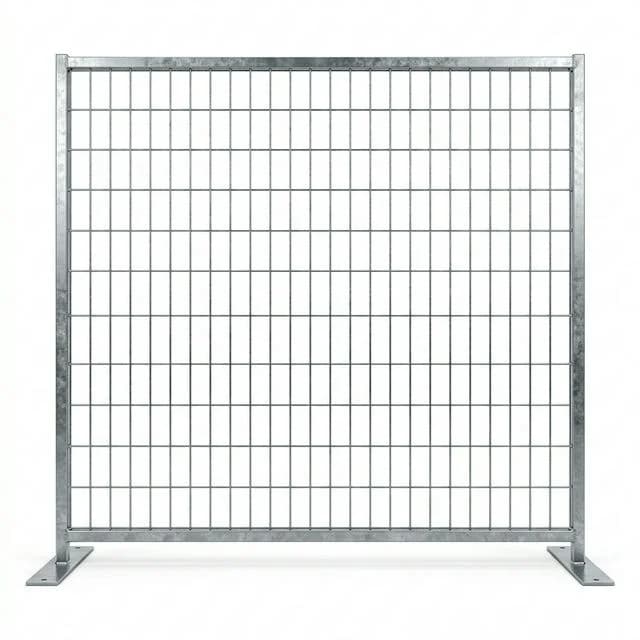
Anti-Climb Temporary Fencing vs. Standard Mesh: A Procurement & Engineering Guide
Compare anti-climb temporary fence panels with standard mesh for aperture limits, bracing, compliance risk, buyer checks, and RFQ-ready decisions.
For many years, the default procurement choice for construction perimeter security was the standard chain-link or wide-aperture welded mesh temporary fence panel. It was cheap, readily available, and met basic "fenced-off" requirements. However, as urban site densities increase, liability costs soar, and regulatory scrutiny tightens, buyers are facing a new baseline: the anti-climb temporary fence panel.
Deciding between anti-climb panels and standard mesh isn't merely a line-item budget choice—it's a critical engineering and risk management decision. This guide breaks down the structural differences, compliance thresholds, cost-benefit realities, and procurement best practices for 2026 and beyond.
Bottom line: If your site borders public walkways, schools, or high-traffic urban areas, standard wide-mesh panels are increasingly viewed by regulators as a liability. Anti-climb fencing (with mesh apertures strictly under 75 mm) is the modern standard for mitigating unauthorized access and protecting both the public and your assets.
Scope note (reviewed July 18, 2026): This is global procurement and engineering guidance for temporary fence panels. It uses Australian regulator examples because they publish concrete aperture, clamping, wind, and public-interface criteria. Final specifications still need local authority, insurer, and engineer confirmation for the project jurisdiction.
Procurement shortcut: if you need a supplier-ready package, compare our temporary fence panels and keep this article open as the technical checklist for aperture, clamping, bases, and bracing.
1. The Core Structural Difference: Mesh Aperture
The defining characteristic of an anti-climb fence panel is its tightly woven or welded wire mesh. The goal is simple: eliminate footholds and handholds.
While a standard temporary fence panel might feature mesh openings of 100 mm to 150 mm (roughly 4 to 6 inches)—large enough for the toe of a boot or a firm hand grip—an anti-climb panel drastically reduces this spacing.
- Standard Mesh Aperture: Typically 100 mm x 200 mm or 150 mm x 60 mm.
- Anti-Climb Mesh Aperture: Typically restricted to a maximum width of 75 mm (often narrower, such as the high-security "358 mesh" which is 76.2 mm x 12.7 mm).
This reduction in aperture size mathematically eliminates the ability for an average adult, let alone a child, to gain the necessary leverage to scale the panel.
For a wider product-selection framework, see our anti-climb fence guide, then use the comparison below to decide whether a temporary-panel system is enough for your perimeter.
Visual 1: Aperture Size Comparison
2. Evidence and Regulatory Context
Why is the industry moving away from standard mesh? It stems from explicit guidance from safety regulators and from the system-level requirements behind temporary fencing.
In Australia, for instance, SafeWork NSW says construction site fencing should use material that prevents footholds and deters climbing, including no mesh greater than 75 mm wide. The same checklist warns against tie wire or cable ties for panel connections and calls for suitable counterweights, baseplates, brackets, or braces in wind and uneven-ground conditions. WorkSafe Victoria similarly frames temporary fencing as a control to prevent unauthorized public access, requiring systems that are well connected, stable under anticipated loads, difficult to climb, and protected against access from underneath.
AS 4687.2:2022 does not make every panel "anti-climb" by name; it sets design, installation, performance, stability, component, and wind-action topics for temporary fencing and temporary pedestrian barriers. That matters because dense mesh is only one part of a compliant system: bracing, bases, clamps, and site-specific loads still have to match the installation. For more detail on the current standard family and common specification traps, see our AS 4687 temporary fencing guide.
Key Evidence Points
- Deterrence: Large apertures create handhold and foothold geometry; a panel below the 75 mm aperture threshold removes the easiest climbing path while keeping the boundary visible.
- Liability: For public-facing sites, an owner needs a documented reason when choosing standard mesh over anti-climb mesh, especially near schools, houses, playgrounds, pubs, clubs, and public walkways.
- Wind Action Force: Denser mesh, shade cloth, signage, and coverings can increase wind demand. Engineers must account for this by specifying bracing, baseplates, brackets, and counterweights instead of treating the mesh panel alone as the system.
3. Structured Comparison: Standard vs. Anti-Climb
When evaluating which panel to purchase or rent, buyers must weigh upfront costs against long-term operational risks. The table below outlines the critical differences.
| Feature / Metric | Standard Mesh Panel | Anti-Climb Panel | Procurement Impact |
|---|---|---|---|
| Typical Aperture Width | 100 mm – 150 mm | < 75 mm (often narrower) | Anti-climb eliminates footholds; standard is only a visual barrier. |
| Wire Density / Weight | Lower (Lighter to lift) | Higher (Heavier, more steel) | Anti-climb requires slightly more effort to deploy but resists bending. |
| Wind Resistance | High pass-through | Moderate pass-through | Anti-climb may require additional bracing in high wind zones. |
| Cost Per Unit | Baseline | Often +15% to +30% premium, depending on wire diameter, coating, and region | Treat the premium as a risk-control cost, not only a steel-price delta. |
| Compliance Rating | General perimeter marking | High-security / Deep compliance | Standard fails many modern urban regulatory checklists. |
| Best Used For | Rural sites, events, internal dividers | Urban sites, high-value assets, deep excavations | Match the panel to the threat profile of the specific location. |
4. Operational Limitations and Boundaries
While anti-climb panels are vastly superior for security, they are not a silver bullet. Understanding their limitations is key to effective site management.
When Anti-Climb Panels Are NOT Enough
- Without Secure Clamping: An anti-climb panel is useless if a trespasser can easily unhook it. Regulators strictly warn against using zip-ties or tie-wire. Tamper-proof couplers that require tools from the inside are mandatory for true anti-climb security; review compatible fence clamps and couplers before freezing the RFQ.
- Without Proper Bases: If the fence can be pushed over or lifted from the bottom, the mesh aperture doesn't matter. Heavy concrete, recycled rubber, or plastic-encased concrete blocks must be used to anchor the system.
- Extreme High-Security Assets: For critical infrastructure (e.g., power substations, prisons), temporary anti-climb panels may still be insufficient. Such sites require permanent perimeter security, PIDS (Perimeter Intrusion Detection Systems), or Class-A hoarding.
When Standard Mesh is Acceptable
It is not necessary to abandon standard mesh entirely. Standard panels remain highly cost-effective and appropriate for:
- Internal Site Division: Separating worker zones from vehicle pathways where security is not the primary concern.
- Rural/Remote Sites: Locations with virtually zero public foot traffic.
- Short-Term Event Crowd Control: Where the goal is guiding crowds rather than preventing malicious entry (though dedicated pedestrian barricades are better here).
5. The 2026 Procurement Checklist for Buyers
If you are transitioning your fleet or project specs to anti-climb, be aware that not all "anti-climb" panels are created equal. Use this checklist to verify supplier quality:
- Verify Aperture Size: Request a schematic. Ensure the mesh width is strictly under 75 mm.
- Check Weld Quality: Ask if the mesh is continuously welded to the tubular frame or spot-welded. Continuous or "Smart" welding prevents the mesh from detaching when kicked.
- Inspect the Frame Tube Thickness: A thick mesh on a flimsy frame will fail. Look for frame wall thicknesses of at least 1.5 mm (or regional equivalent).
- Galvanization Specs: Ensure the panels are heavily galvanized (e.g., hot-dipped) to prevent the denser mesh from becoming a rust trap.
- System Completeness: Does the quote include tamper-proof clamps and high-visibility, heavy-duty bases?
6. Frequently Asked Questions (FAQ)
Q: Can I just add privacy shade cloth to a standard panel to make it anti-climb?
No. Shade cloth does not provide structural resistance. A trespasser can easily cut the cloth or use the underlying standard mesh gaps as footholds. Furthermore, adding shade cloth drastically increases wind loading and requires extensive engineered bracing.
Q: Are anti-climb panels significantly heavier for workers to install?
They are heavier due to the increased steel content in the dense mesh, but they are still designed to be handled by a two-person team. The weight difference usually amounts to only a few kilograms per panel.
Q: Will upgrading to anti-climb panels lower my site insurance premiums?
In many jurisdictions, demonstrating proactive risk management by exceeding basic security standards (such as adopting anti-climb fencing) can be a strong negotiating point during insurance renewals. Consult your broker.
Q: Can anti-climb panels be mixed with standard panels on the same site?
Yes. A common cost-saving strategy is to use anti-climb panels on the public-facing perimeter and standard panels for internal dividers or rear boundaries adjoining secured properties. Ensure the clamps are compatible.
7. Next Steps and Recommendations
The era of defaulting to the cheapest wide-mesh panel is closing. Regulators, insurers, and the public expect construction perimeters to actively deter entry, not just passively warn against it.
For Procurement Teams: Audit your current temporary fencing inventory. If your fleet is dominated by standard mesh, begin phasing in anti-climb panels for your high-risk urban deployments.
For Engineers & Site Managers: Update your site security plans to explicitly mandate < 75mm mesh apertures for all public-facing perimeters.
If you are evaluating your next purchase order and need to balance cost with compliance, our team can help model the exact requirement for your next project. Start with the temporary fence panel range, then request a project quote with your perimeter length, public-interface sides, expected coverings, wind zone, and preferred base system.
Sources & References
- SafeWork NSW: Site Security Checklist. Guidance on less than 75 mm mesh width, secure clamping, and wind-stability checks. Accessed July 18, 2026. safework.nsw.gov.au
- WorkSafe Victoria: Construction site security fencing guidelines. Guidance on preventing unauthorized public access, climb resistance, access from underneath, and wind-loading effects from coverings. Accessed July 18, 2026. worksafe.vic.gov.au
- AS 4687.2:2022: Temporary fencing and hoardings - Part 2: Temporary fencing and temporary pedestrian barriers. Accessed July 18, 2026. Standards Australia
Author

Categories
More Posts
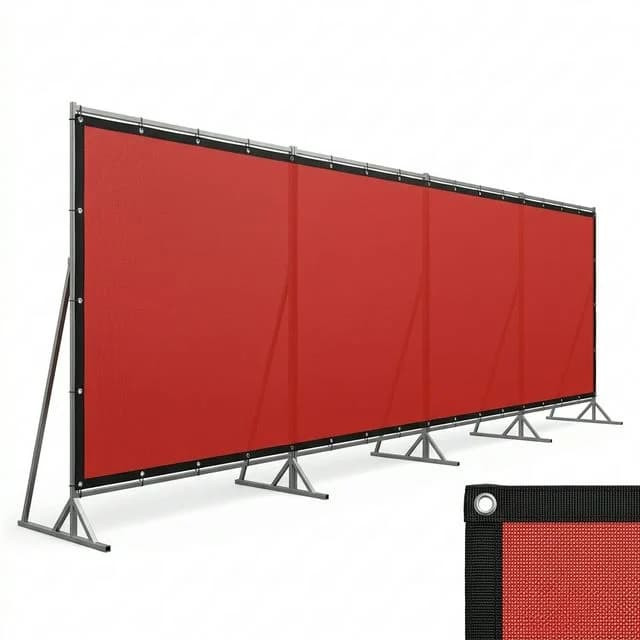
Acoustic Barriers on Temporary Fencing: Wind Loads & Noise Compliance Guide
Learn how attaching acoustic blankets to temporary fence panels impacts wind loading, structural stability, and noise compliance for urban construction sites.
March 2026 Update: U.S. Temporary Steel Fencing Duties From China and the April 9 Buying Window
The U.S. Commerce Department has issued final AD/CVD determinations on temporary steel fencing from China. This deep-dive translates the March 2026 decision into landed-cost, sourcing, scope, and compliance actions for contractors, rental fleets, and distributors.

The Procurement Choice: Crowd Control Barriers vs. Temporary Fence Panels
A B2B tactical guide on choosing between crowd control barriers and temporary fence panels. We evaluate deployment speed, ROI for rental fleets, and interlocking mechanisms.