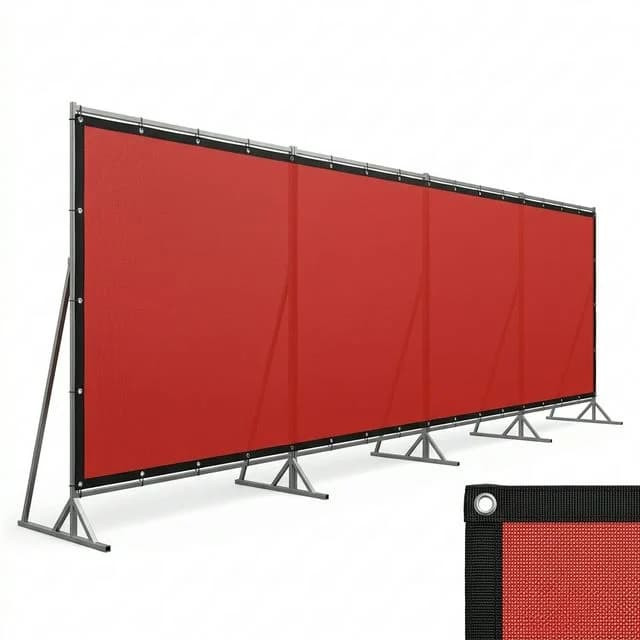
Acoustic Barriers on Temporary Fencing: Wind Loads & Noise Compliance Guide
Learn how attaching acoustic blankets to temporary fence panels impacts wind loading, structural stability, and noise compliance for urban construction sites.
Urban construction in 2026 faces an unprecedented clash of regulatory requirements. On one hand, site managers must secure perimeters against unauthorized access using robust temporary fence panels. On the other hand, tightened municipal noise ordinances increasingly mandate the use of acoustic barriers or noise-reducing blankets along those very same perimeters.
While clipping a noise blanket to a temporary fence might seem like a simple procurement task, it fundamentally alters the engineering reality of the fence. An open mesh panel allows wind to pass through; an acoustic blanket turns that panel into a solid sail.
Failure to account for this change in aerodynamics is the leading cause of temporary fence blow-overs on urban sites, resulting in damaged assets, pedestrian injury risks, and severe regulatory fines. This guide breaks down the structural impacts, compliance requirements, and procurement strategies for safely deploying acoustic barriers on temporary fencing.
Engineering Bottom Line: You cannot attach a solid or semi-solid acoustic blanket to a standard standalone temporary fence panel. The addition of a barrier requires a comprehensive recalculation of wind drag, necessitating heavy-duty bases, engineered bracing, and high-tensile couplers.
Publication date and scope: Published July 24, 2026. This global guide is for temporary fence panels carrying acoustic blankets, solid screens, or similar low-porosity noise-control covers. It does not replace a site-specific structural design, local wind code, municipal noise permit, or manufacturer test certificate. Treat the values below as RFQ screening ranges, then require a qualified engineer to check final bracing, ballast, ground anchors, and removal triggers.
Early procurement CTA: If your bid already includes acoustic blankets, send the fence length, panel height, cover type, ground condition, and design wind basis to our engineering support team before comparing panel prices.
1. The Conflict: Noise Compliance vs. Structural Stability
Urban municipalities are aggressively lowering the acceptable decibel (dB) limits for construction sites operating near residential zones, schools, and hospitals. To comply, contractors often rent or purchase heavy, mass-loaded vinyl or quilted fiberglass acoustic blankets designed to absorb and deflect equipment noise.
These blankets are highly effective at noise attenuation (often reducing noise by 10 to 20 dB), but they present a massive structural challenge.
The Aerodynamic Shift
A standard welded mesh temporary fence panel has a high porosity (often 80% or more). This means most of the wind passes directly through the gaps, exerting minimal drag force on the frame.
When you attach an acoustic blanket, the porosity drops to near 0%. The wind drag coefficient multiplies exponentially. A moderate 40 km/h gust that a standalone panel would easily survive can easily exert enough overturning moment to snap weak welds or flip standard concrete bases when a blanket is attached.
Visualizing the Impact: Wind Load on Mesh vs. Solid Barriers
2. Engineering the Solution: System Upgrades
To safely deploy acoustic blankets, procurement teams and engineers must shift from buying individual panels to specifying a complete wind-rated hoarding system.
Heavy-Duty Structural Bracing
When acoustic barriers are applied, relying solely on standard base blocks is inadequate. The system requires diagonal bracing installed at regular intervals (typically every panel or every second panel, depending on local wind speeds). These braces extend from the top third of the panel down to an anchor point on the ground, creating a rigid triangle that resists overturning.
Ballast and Anchoring
If the site ground is concrete or asphalt and cannot be drilled, the braces must be weighed down with significant ballast. Standard 28kg plastic-encased concrete feet are insufficient. Engineers often specify heavy kentledge blocks (e.g., 500kg to 1000kg concrete blocks) or heavy-duty steel baseplate systems securely pegged into the soil.
High-Tensile Clamping
The couplers holding the panels together bear a massive shear load when wind hits a blanketed fence line. Standard lightweight clamps can snap or bend. Upgrading to heavy-duty, tamper-proof fence clamps made of thick gauge galvanized steel is mandatory to ensure the fence acts as a cohesive structural unit rather than individual sails.
3. Comparative Matrix: Setup Specifications
How do your specifications need to change when adding acoustic compliance? This matrix outlines the engineering requirements based on the addition of solid barriers.
| Component / Metric | Standalone Open Mesh | With Privacy Shade Cloth (50%) | With Acoustic Blanket (0% Porous) | Procurement Action |
|---|---|---|---|---|
| Wind Drag Coefficient | Low (~0.2 to 0.4) | Medium (~0.6 to 0.8) | High (approaching 1.2 to 1.5) | Update wind load modeling with engineering team. |
| Panel Frame Thickness | 1.2mm wall thickness acceptable | 1.5mm wall thickness recommended | 2.0mm+ wall thickness mandatory | Specify heavy-duty panels only. |
| Base Block Requirement | 1 x 28kg foot per joint | 2 x 28kg feet per joint | Engineered kentledge / heavy anchors | Do not rely on standard feet. |
| Diagonal Bracing | Only in high wind zones | Every 2nd to 3rd panel | Every panel (subject to engineer design) | Order bracing struts matching panel count. |
| Coupler Specification | Standard clamps | Heavy-duty clamps | High-tensile, double-bolted clamps | Prevent joint sheer failure. |
| Typical Maximum Height | 2.1 meters | 2.1 meters | Often restricted unless heavily engineered | Check local height-to-ballast ratios. |
4. The Procurement and Installation Checklist
If your project specifies acoustic barriers, use this checklist before issuing an RFQ or approving a site installation plan:
- Wind Load Certification: Has a structural engineer provided a wind rating certificate (e.g., to AS 4687 or AS/NZS 1170.2) specifically accounting for the acoustic blanket's weight and zero-porosity drag?
- Panel Quality Verification: Are the proposed panels heavy-duty? Standard lightweight panels will buckle at the frame even if the base is heavily weighted.
- Bracing Assessment: Does the quote include the requisite number of diagonal braces, fence bases and feet, and heavy anchor weights?
- Barrier Attachment Method: Are the acoustic blankets attached using heavy-duty zip ties or engineered clips? The attachment must be secure enough not to rip in wind, but in extreme cyclone/hurricane conditions, sacrificial ties that snap and release the blanket (saving the fence) might be required by design.
- Ground Condition Check: Can the braces be pegged into the earth, or will they require concrete ballast blocks due to hardstand surfaces?
For a starter model of brace spacing assumptions, use the temporary fence brackets selector before issuing the RFQ, then replace the starter spacing with supplier test evidence or project engineering calculations.
5. Frequently Asked Questions (FAQ)
Q: Can we use standard shade cloth instead of acoustic blankets to save money and reduce wind load?
A: No. Shade cloth provides privacy and dust control but has virtually zero acoustic mass. It will not reduce decibel levels and will fail noise compliance tests.
Q: Does the acoustic barrier go on the inside or the outside of the fence?
A: Typically, barriers are installed on the inside (construction side) of the fence to protect the material from public vandalism and to prevent the barrier from creating footholds on the exterior side, which would violate anti-climb security requirements.
Q: Are there lightweight acoustic options?
A: Noise attenuation requires mass. While some modern quilted barriers use advanced composites to optimize weight-to-performance, they all remain essentially zero-porosity sails when hung on a fence. The wind drag issue remains regardless of slight weight reductions.
Q: What if a major storm is forecast?
A: The site's extreme weather protocol should include a trigger point (e.g., forecasted winds exceeding the engineered limit) at which workers must remove the acoustic blankets from the fence line to save the structural integrity of the perimeter.
6. Closing Recommendations
The requirement for acoustic barriers is becoming standard in major urban centers globally. Procurement teams must move past pricing "panels and blankets" as separate line items and begin sourcing integrated, wind-rated hoarding systems.
Failing to brace an acoustic-clad fence is a guaranteed path to failure. When the fence blows over, the cost of property damage, project delays, and safety fines will dwarf the initial cost of specifying heavy-duty panels and bracing.
To ensure your next urban perimeter is both compliant with noise ordinances and structurally secure against wind loads, review our heavy-duty temporary fence panels and contact our engineering support team for a comprehensive bracing and ballast calculation for your specific site.
Sources & References
- AS 4687.2:2022: Temporary fencing and hoardings - Part 2: Temporary fencing and temporary pedestrian barriers. Provides the framework for wind action calculations on temporary structures. Standards Australia
- AS/NZS 1170.2: Structural design actions - Wind actions. The core standard for calculating drag coefficients on solid and porous structures. Standards Australia
- OSHA Construction Noise Regulations (29 CFR 1926.52): Occupational noise exposure limits and the requirement for feasible administrative or engineering controls (like acoustic barriers). OSHA
- Temporary Works Forum Hoardings Guide: Practical guidance on hoarding risk, design responsibility, and the need for competent temporary works design when barriers behave as solid structures. Temporary Works Forum
Author

Categories
More Posts

The Ultimate Deep-Dive: How to Choose Temporary Fence Panels for Wholesale & Construction Sites
A comprehensive, technical guide for procurement managers on selecting temporary fence panels. We cover tube thickness, galvanizing standards, and 40HQ container loading optimization.
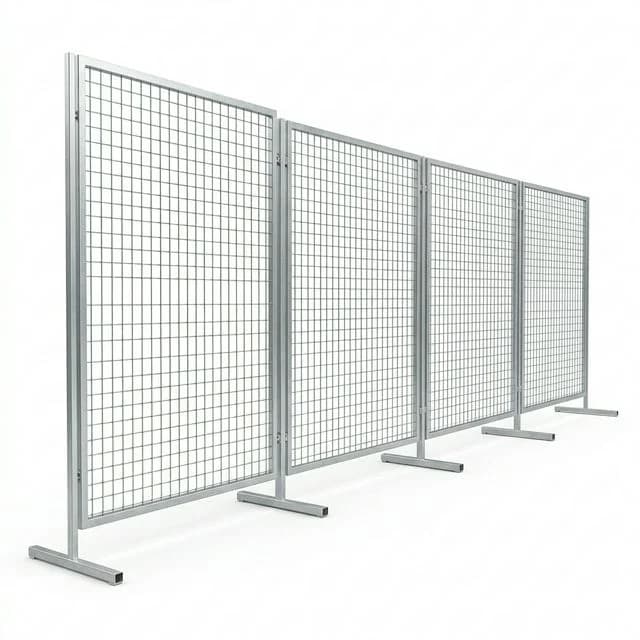
The Engineer’s Guide to Temporary Fence Wind Loading, Bracing, and Blowover Prevention
Use this temporary fence wind loading guide to compare privacy-screen sail effects, bracing, ballast, and blowover prevention checks before RFQ.
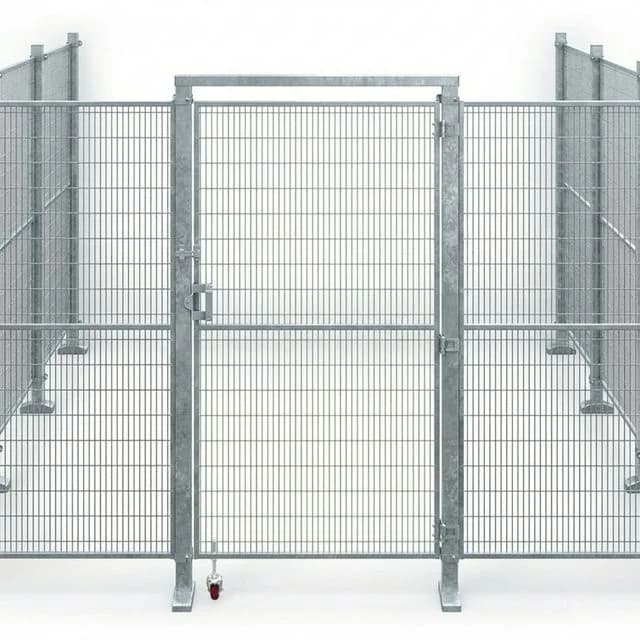
March 2026 Update: U.S. Temporary Steel Fencing Duties From China and the April 9 Buying Window
The U.S. Commerce Department has issued final AD/CVD determinations on temporary steel fencing from China. This deep-dive translates the March 2026 decision into landed-cost, sourcing, scope, and compliance actions for contractors, rental fleets, and distributors.